Research and exhibition for the Canadian Centre for Architecture
CCA C/o Buenos Aires program.
2020 - 2023
This project aims to establish a correlation between architecture and a strange financial reality that, for decades, has pervaded in Argentina — ordered or disordered on a double monetary system in which the Argentine peso and the US dollar seem to be bound by a stormy relationship.
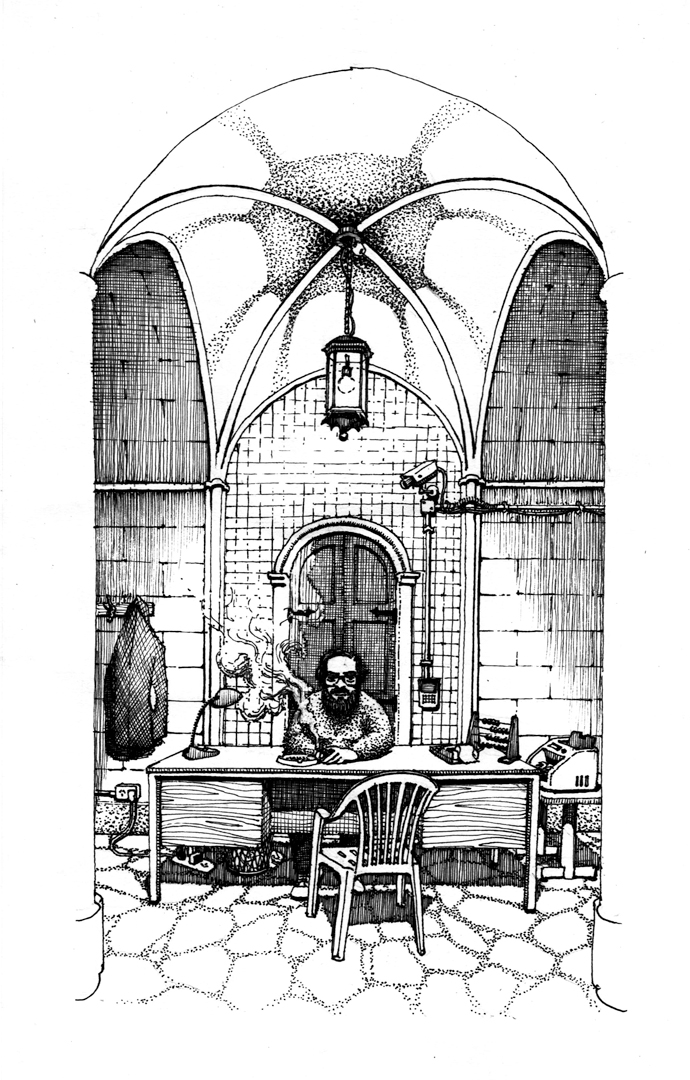
Architecture as a commercial operation, as in the purchase and sale of real estate and homes, is carried out in dollars—as if it were a commodity of international exchange—while the rest of the economy, such as wages, salaries, material goods, food, expenses, taxes, etc. is carried out in pesos. This is because those who have disposable income save in dollars. Originally, the dollar was part of the banking system, however, the successive crises and a growing lack of trust in the banking system led people to bypass formal structures by depositing cash in safe deposit boxes, in cuevas1, or in their own homes. In this case, both personal homes and investment property have functioned as havens for financial value—and this is how the extraordinary link between architecture and the dollar was forged. The architect, an accomplice to this reality, knew how to navigate these informalities by using mechanisms that enabled them to meet demands while at the same time generating more work. The most well-known of these systems is the fideicomiso, a local expression of trust deeds that was adopted from inheritance law, adapted to building production, and subsequently became a coveted refuge for savings after the crisis of 2001. This form of trust existed during the Roman Empire and is traditionally a tool through which a transfer of assets is structured between parties, usually family members, without being tied to the professional activities of the people involved. In the building development context, it allows investors and trustors to transfer money or land to a trustee, an architect, or a limited liability company that act as a developer, with the aim of carrying out a project that generates benefits—in this case, building units that are distributed among the beneficiaries at the end of the journey. In part, the success of this legal tool in the local context lies in its ability to protect assets and parties. But, mostly, it succeeded as a result of its ability to remain invisible to regulatory bodies.
The Sultans of Swing
Curatorial text by Martin Huberman
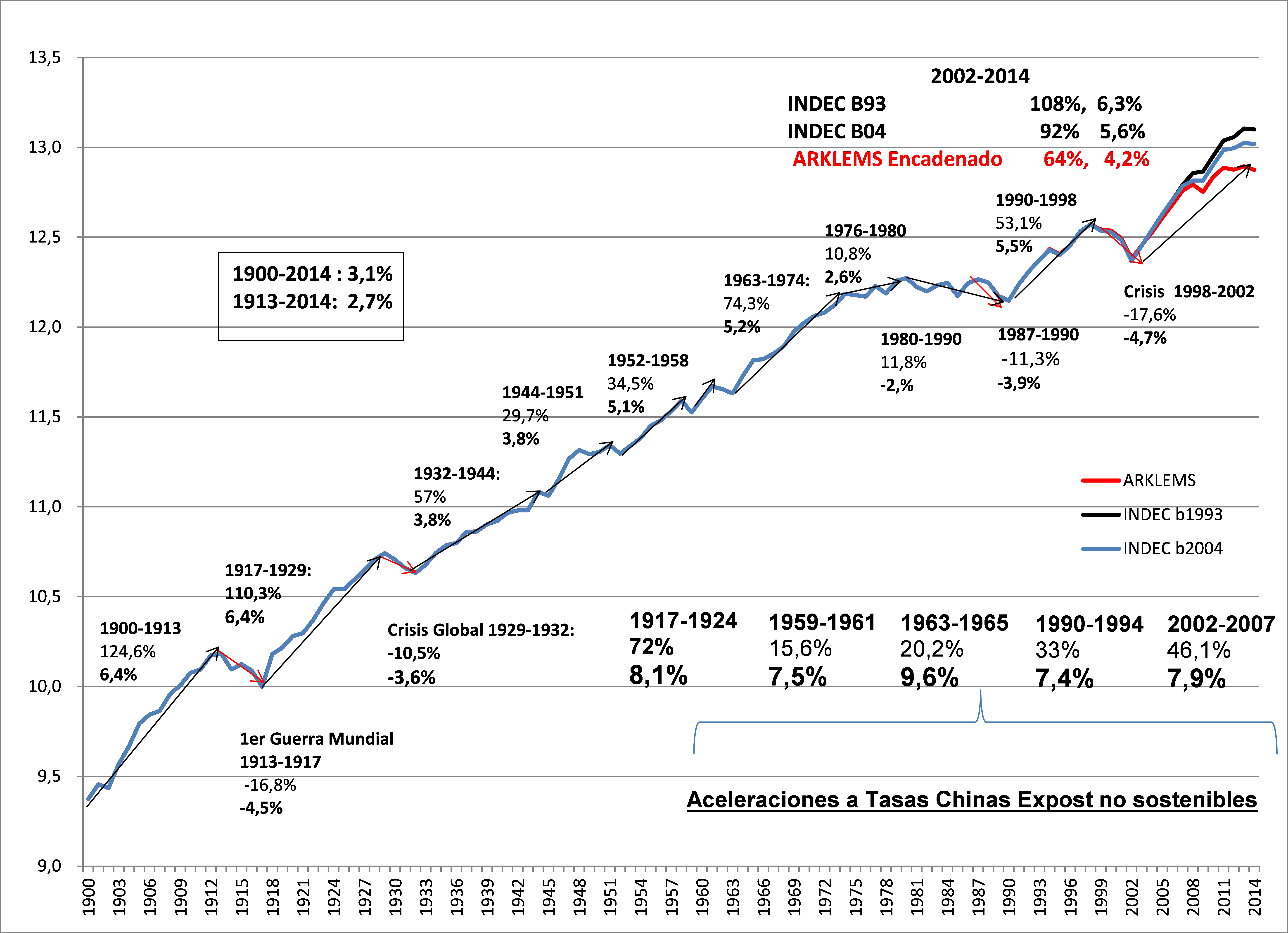
Isaac Newton’s third law of motion says that if a body exerts a force or action on another, the second body will generate a force, called a reaction, of equal magnitude but opposite in direction. This law outlining the basics of classical dynamics could also describe the economic and social behaviour that regulates crises and, in reaction, post-crises. Like a reaction engine, every period of crisis is followed by a period of equal force and magnitude in economic boom and social movement. It happened in the United States after the Great Depression, then in “The Glorious Thirties” in France and other European countries after undergoing twenty years of wars, and, finally, after the global crisis of 2008.
In Argentina, the vernacular version of the formula is enhanced by the predictability with which this terrible swing, of indeterminate duration and impact, occurs every ten years. Here, people have through the ages acquired survival strategies to deal with the fallout that are based on the powerful motto “every man for himself,” laying the bases for creative systems that help to establish a new social order.
The crisis that erupted in December 2001 in Argentina is perhaps the most dramatic and deep-seated in its history, and the one with the greatest impact on the social fabric of its cities. From 2001 to 2003, the country was immersed in an unprecedented institutional and representative vacuum that served, along with other mobilizations, as the baseline for local assemblyism as a trial for a new form of governance. At the same time, an idea was outlined to replace economic activity based on unlimited consumption with bartering practices that created a fragile new financial system, almost ancestral in nature, as the national economy unravelled in a stream of government bonds. Mortgage credit systems were undermined by bankruptcy and inflation, and traditional access to home-buying became almost impossible. Financial activity collapsed due to the sudden drop in confidence in the banks, partly responsible for triggering the debacle by preventing their clients from accessing their savings. Insecurity seized the streets with new forms of crime and fuelled the proliferation of organizations that proposed seclusion as a way of mitigating fear. At the same time, informal residential developments in the city and its suburbs increased their population by between 50 and 70 percent, taking in both migrants seeking refuge in the cities and vulnerable sectors driven to homelessness by the crisis.
During the subsequent rebound, as the period of economic boom between 2003 and 2008 is popularly known, a general policy of laissez-faire prevailed, seeking rapid economic growth while reshuffling institutions. The social climate, which in the heat of the crisis had advocated a drastic change in political and social structures under the banner of cooperative, collaborative post-capitalism, was slowly seduced once again by the apparent comfort of deregulated super-consumerist late capitalism.
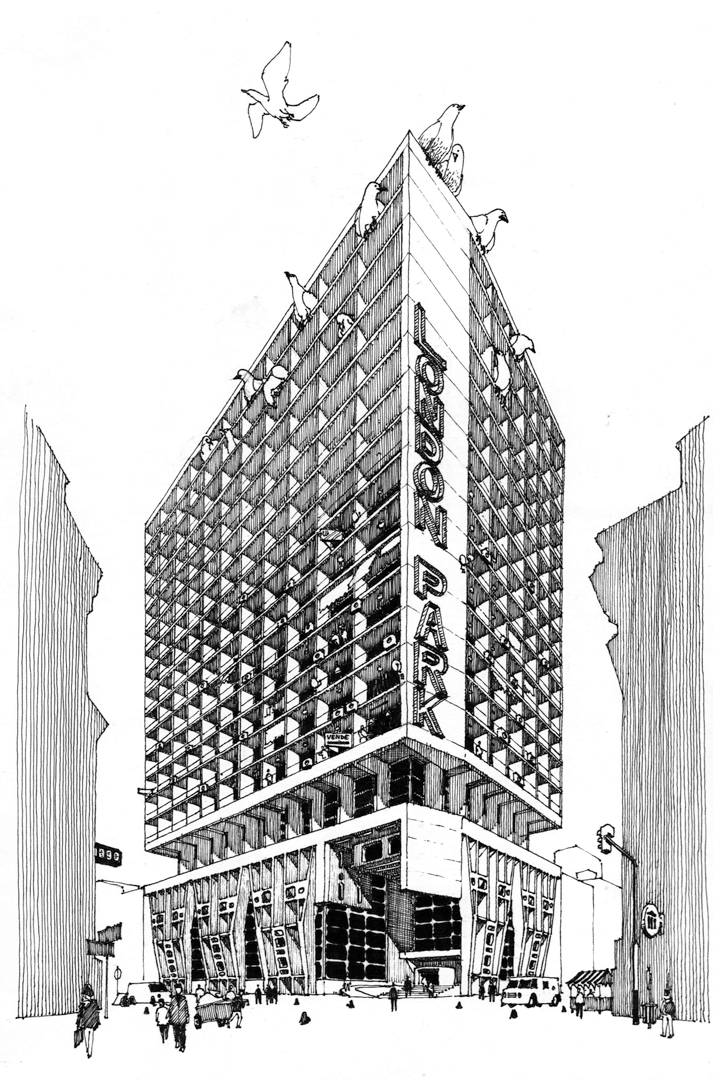
Architecture and construction, hard-hit even in the years before the crisis, were reduced to alternative models of survival. The sudden shift from complete stagnation to the sector’s explosive resurgence as the result of fresh confidence in construction as the only sustainable future investment, saw the discipline become a financial laboratory to safeguard savings and construct new ideas of security. Accordingly, with a minimum of urban and mortgage planning guidelines, the transformations effected in the profile of the city and its peripheries took place almost exclusively in the private sector. As gated districts multiplied, emergency satellite neighbourhoods grew and forged self-organized direct links with sources of investment and money. The slum as a social sponge, the dwelling as a way of saving, the architect as a developer, and private districts as a new ideal of suburban life are some of the most marked features of the period.
This period of “unlimited” deregulated growth for Buenos Aires in terms of its built environment generated an architecture that articulated social relations and extravagantly danced between the formal and the informal. The discipline adopted a strange unconditionality towards money, becoming an almost self-sufficient financial body. A closer study ought to be made of the capacity of architecture to arbitrate in the urban and social conflicts that emerged with the increased insecurity that marked the period, and of the architecture itself that transcended its projective structure and became organic in its contemporaneity, even at the cost of a social perspective.

The place of money
Juan Campanini y Josefina Sposito
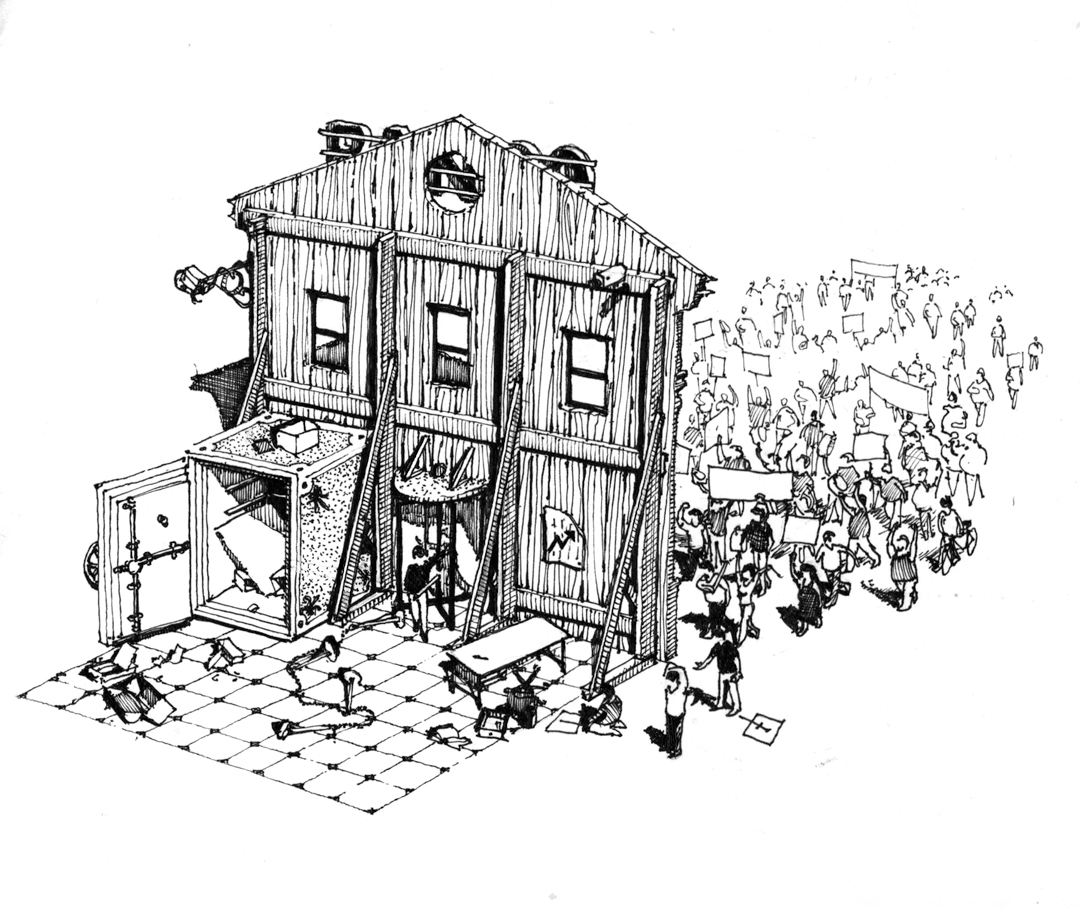
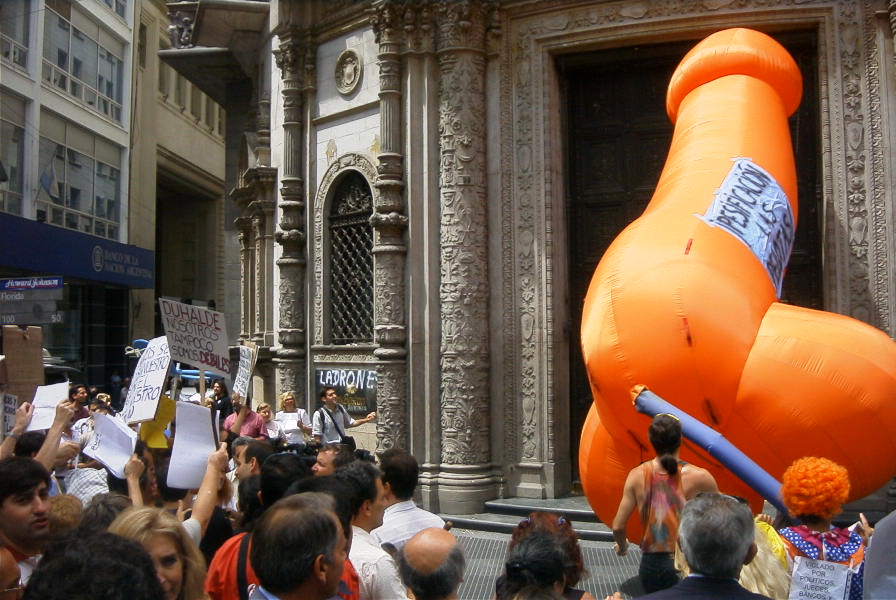
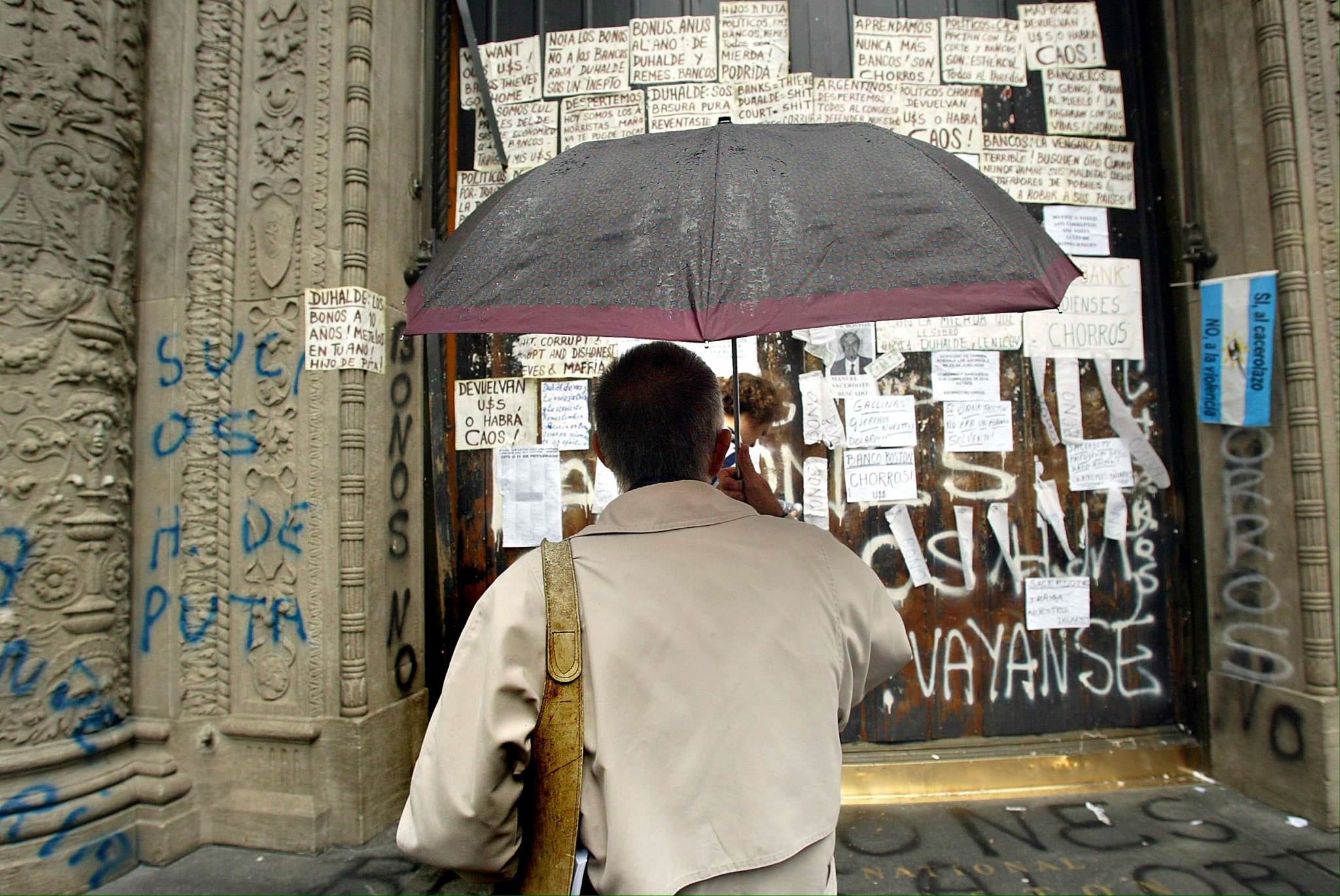
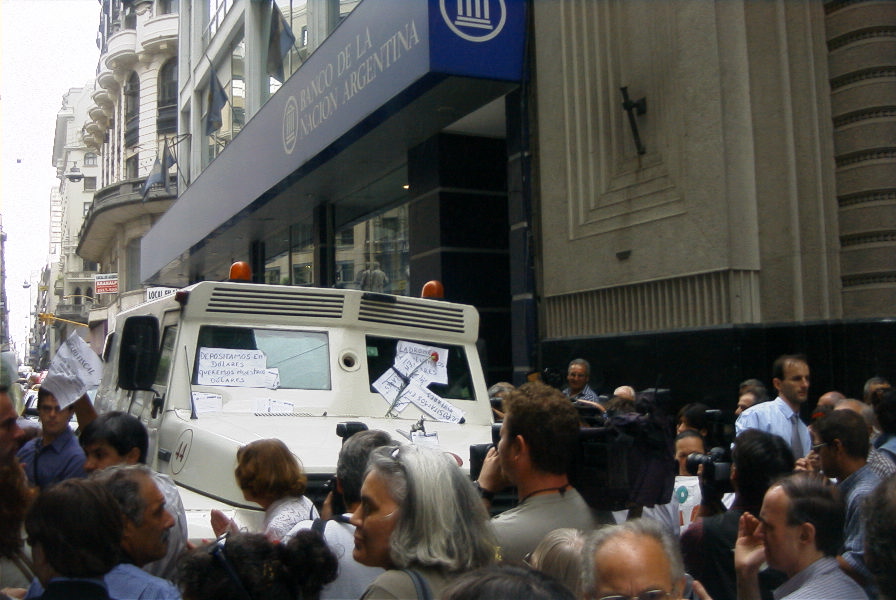
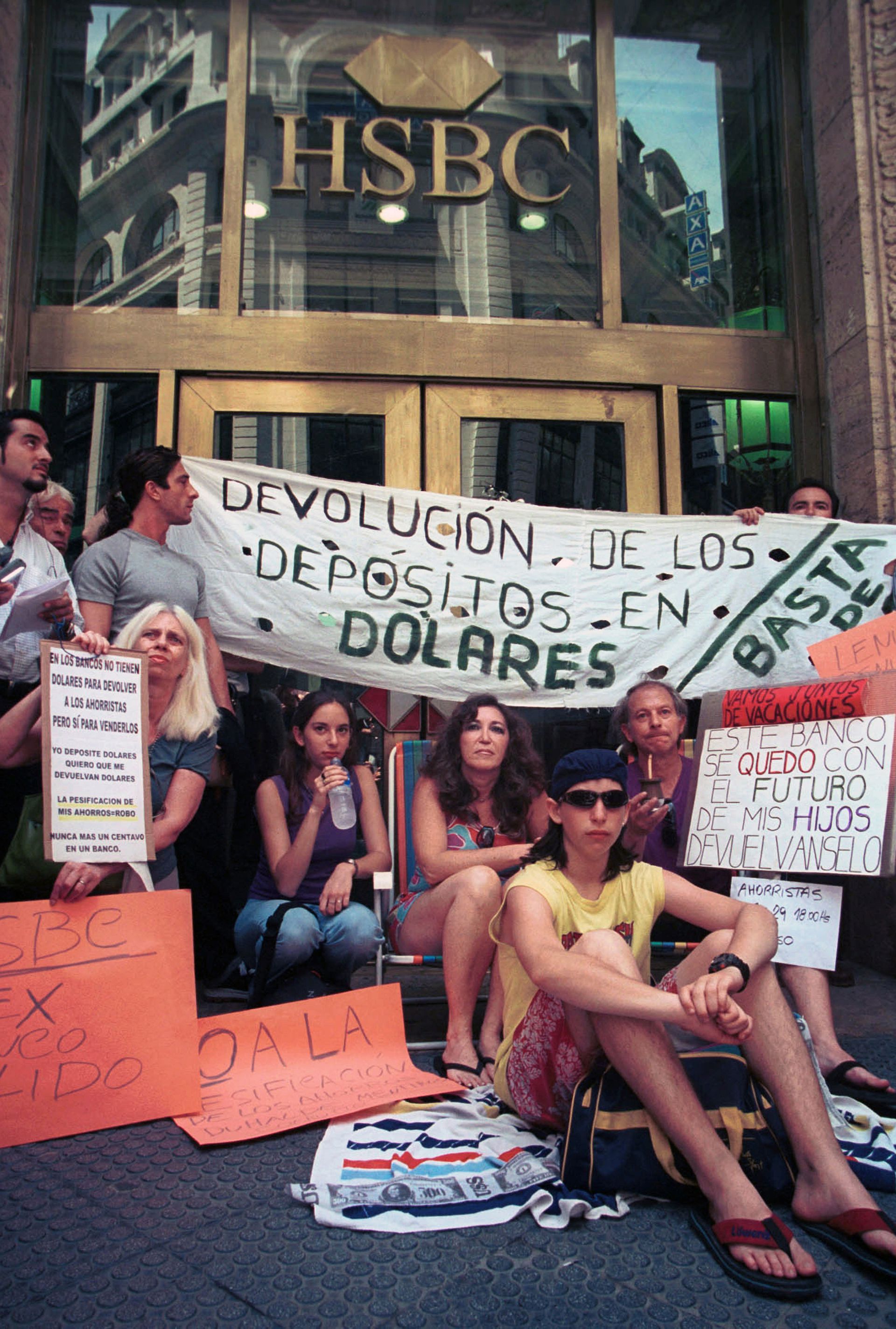
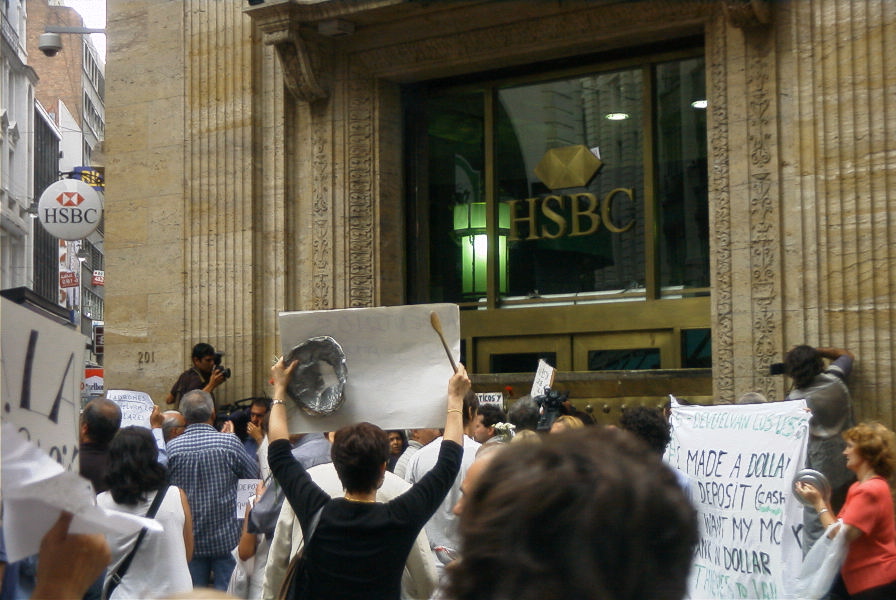
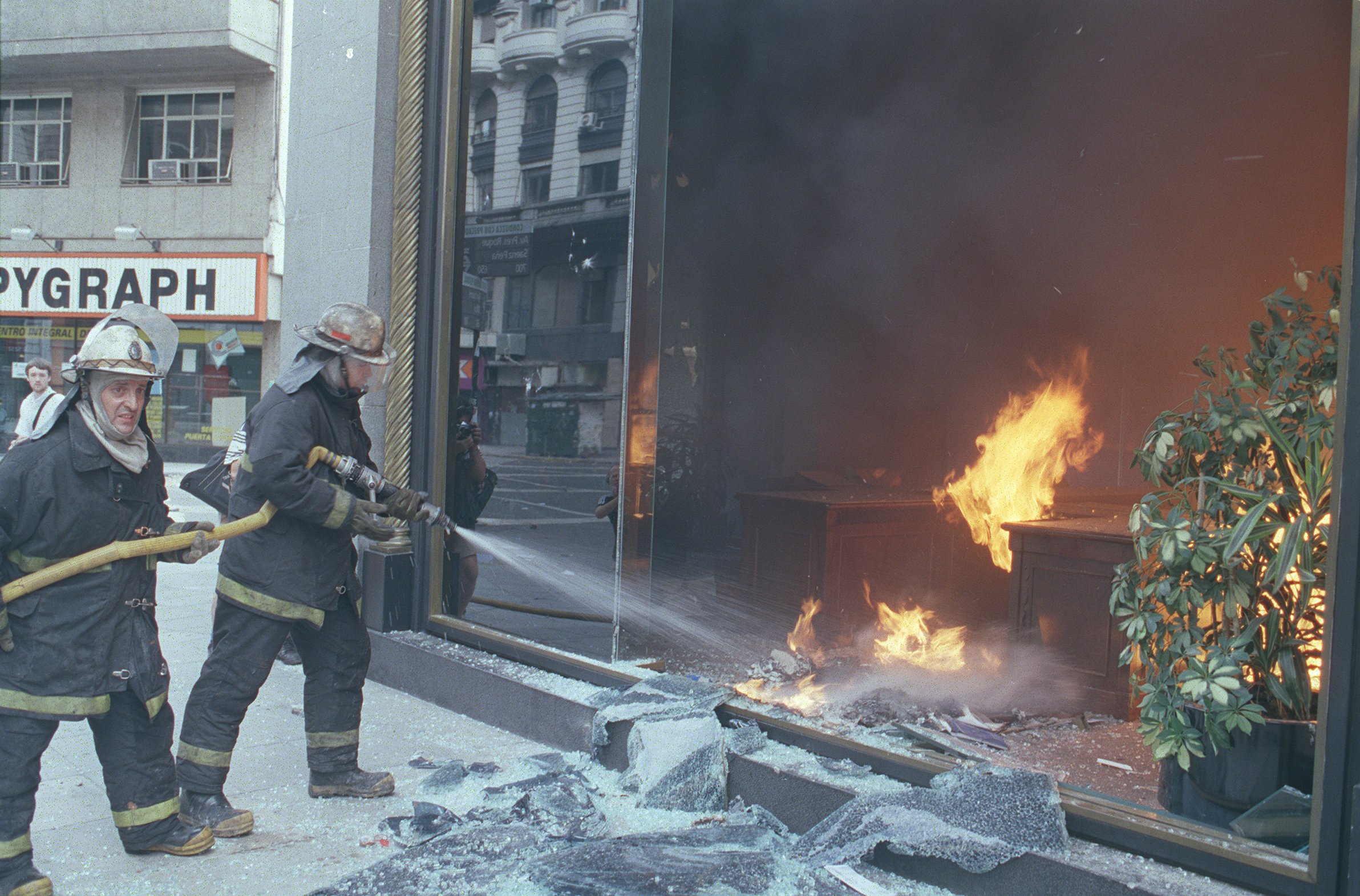
The relationship between Argentinian society and its banking system is covered by a heavy veil of mistrust and deception. December 2001 marked a turning point in its history—a total breakdown of the banking system. The neighbourhood of Buenos Aires that houses the headquarters of the main banks in a few blocks, popularly know as La City, was the centre of the scene.
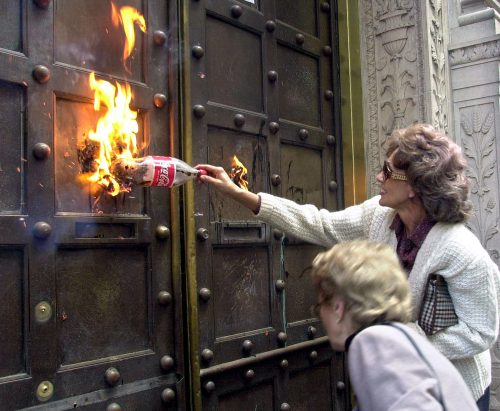
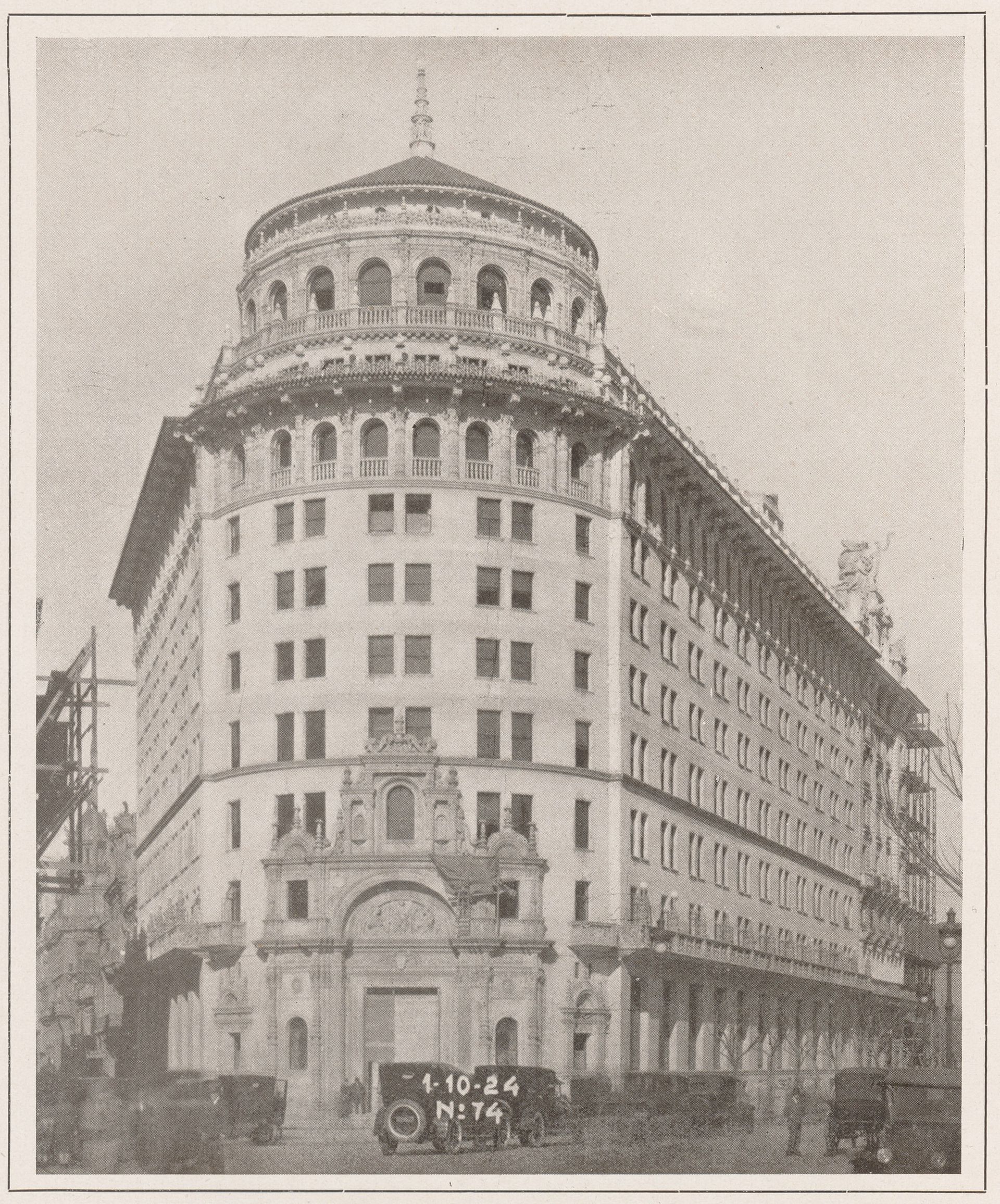
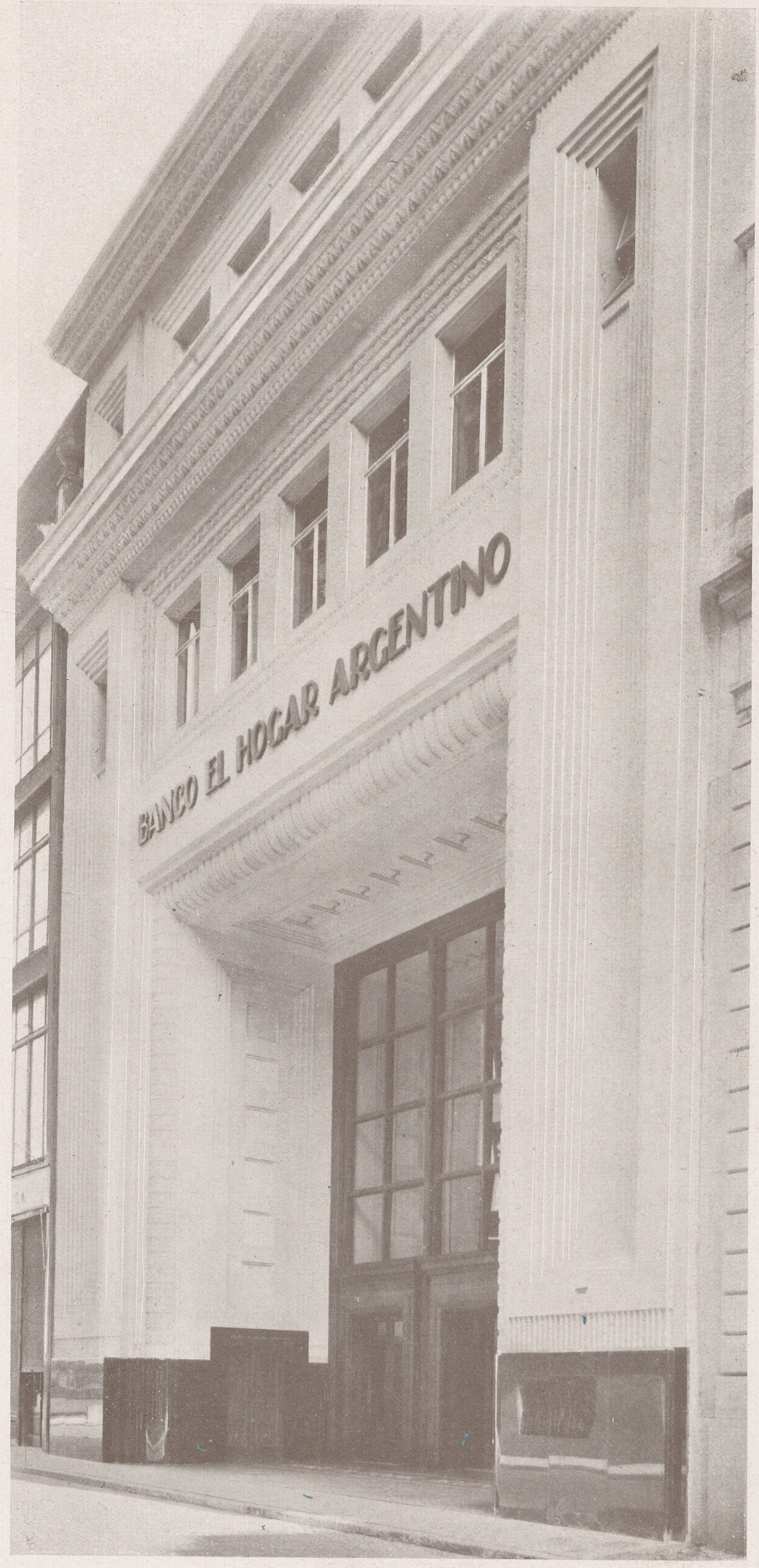
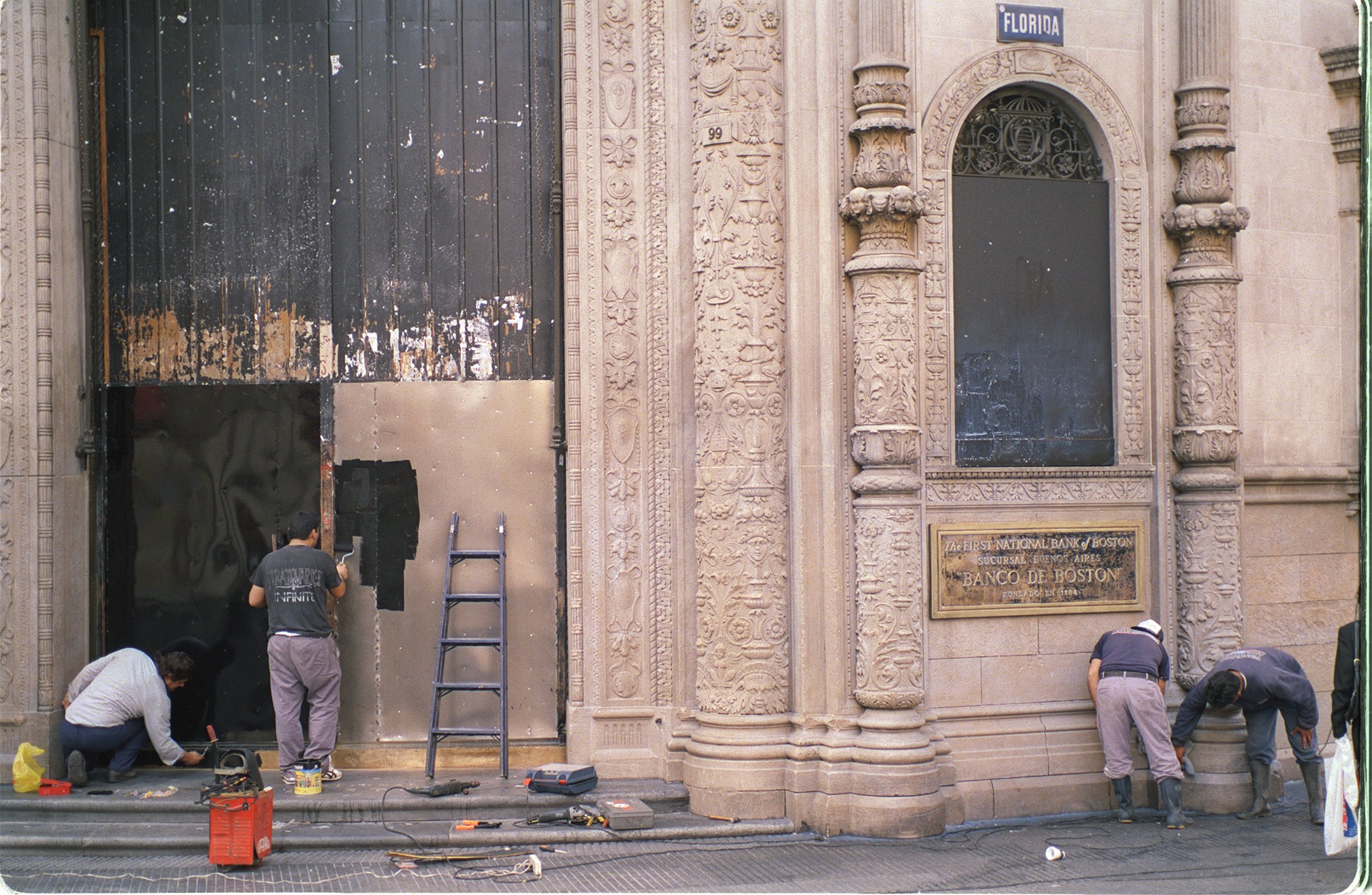
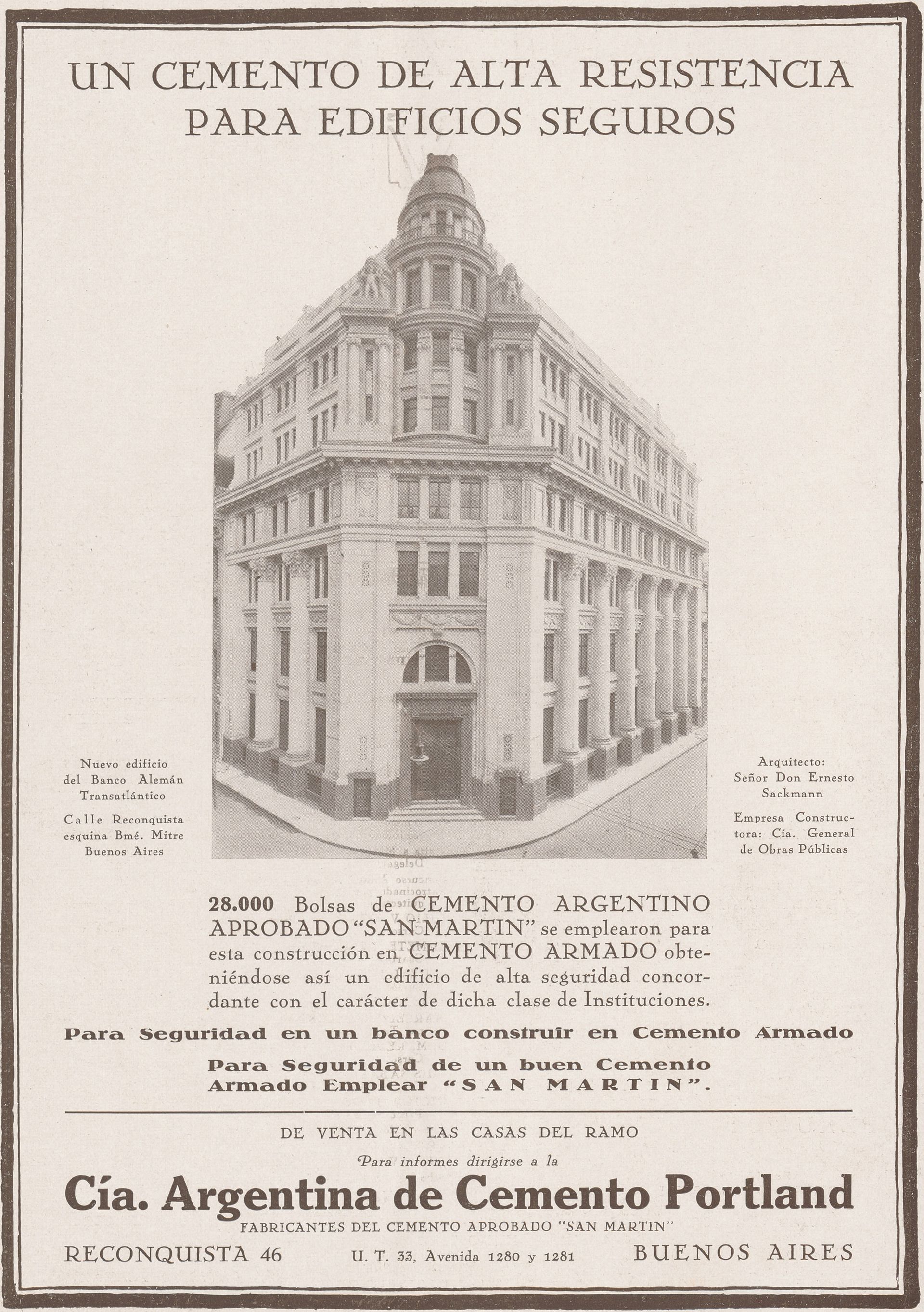
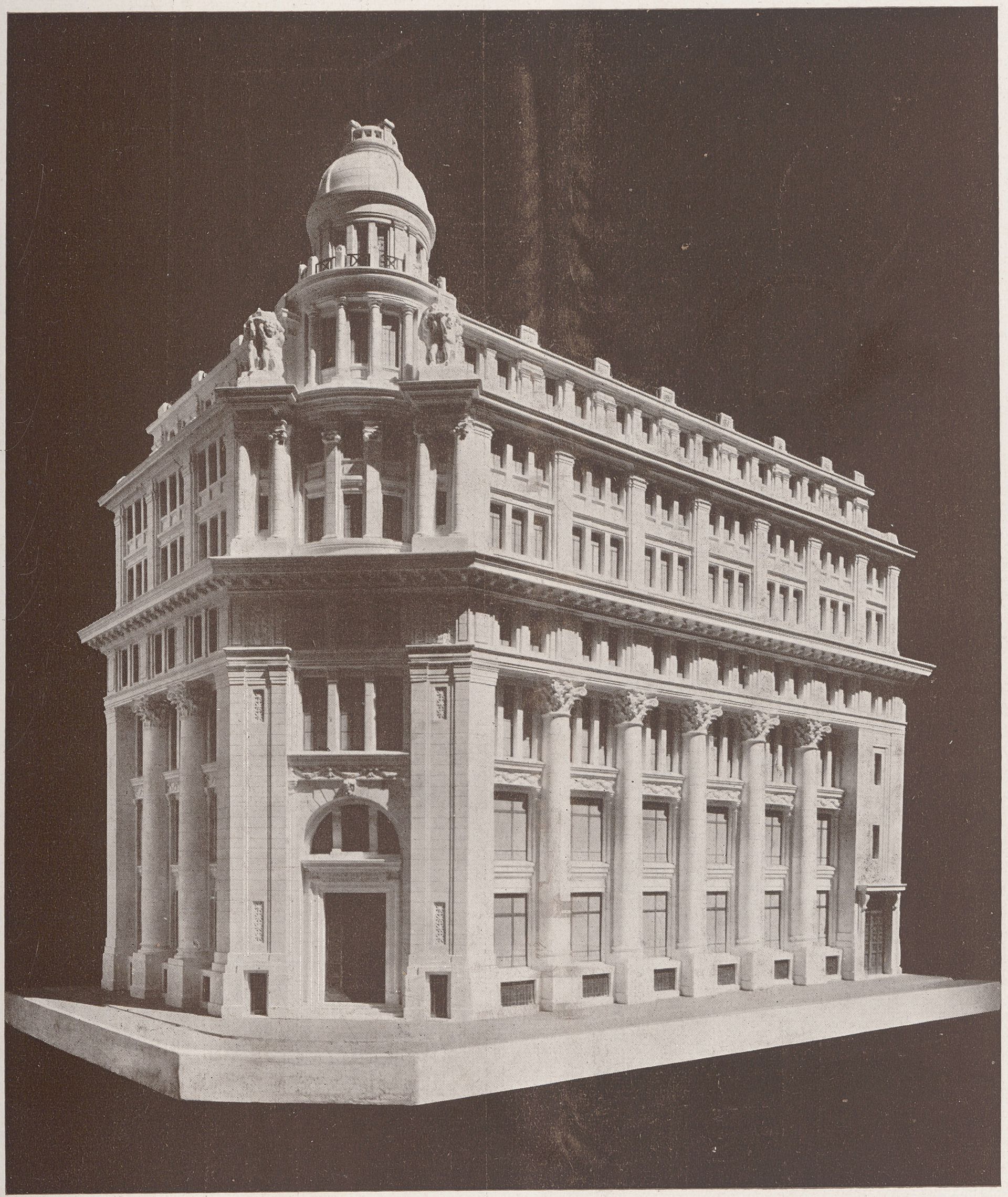
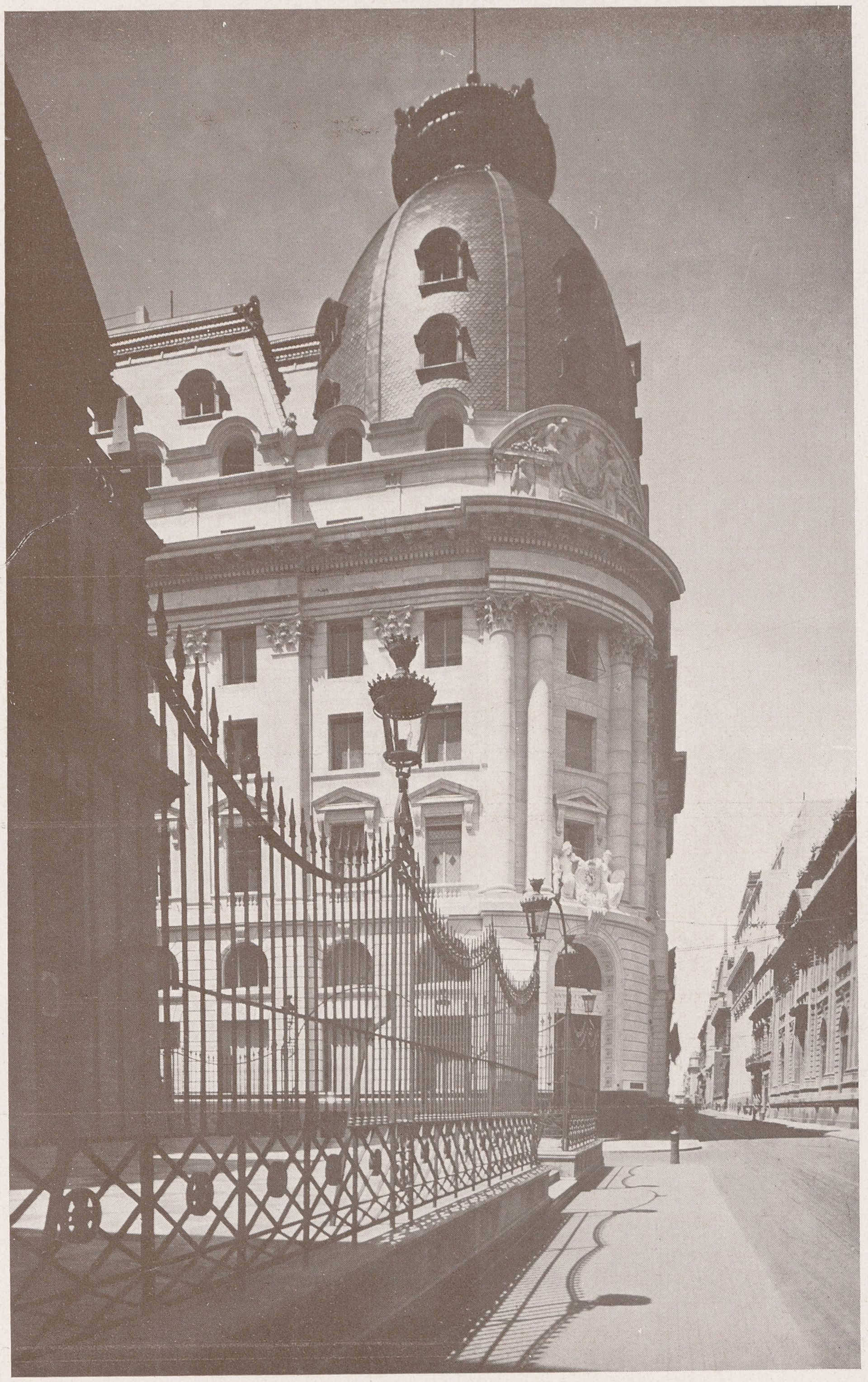
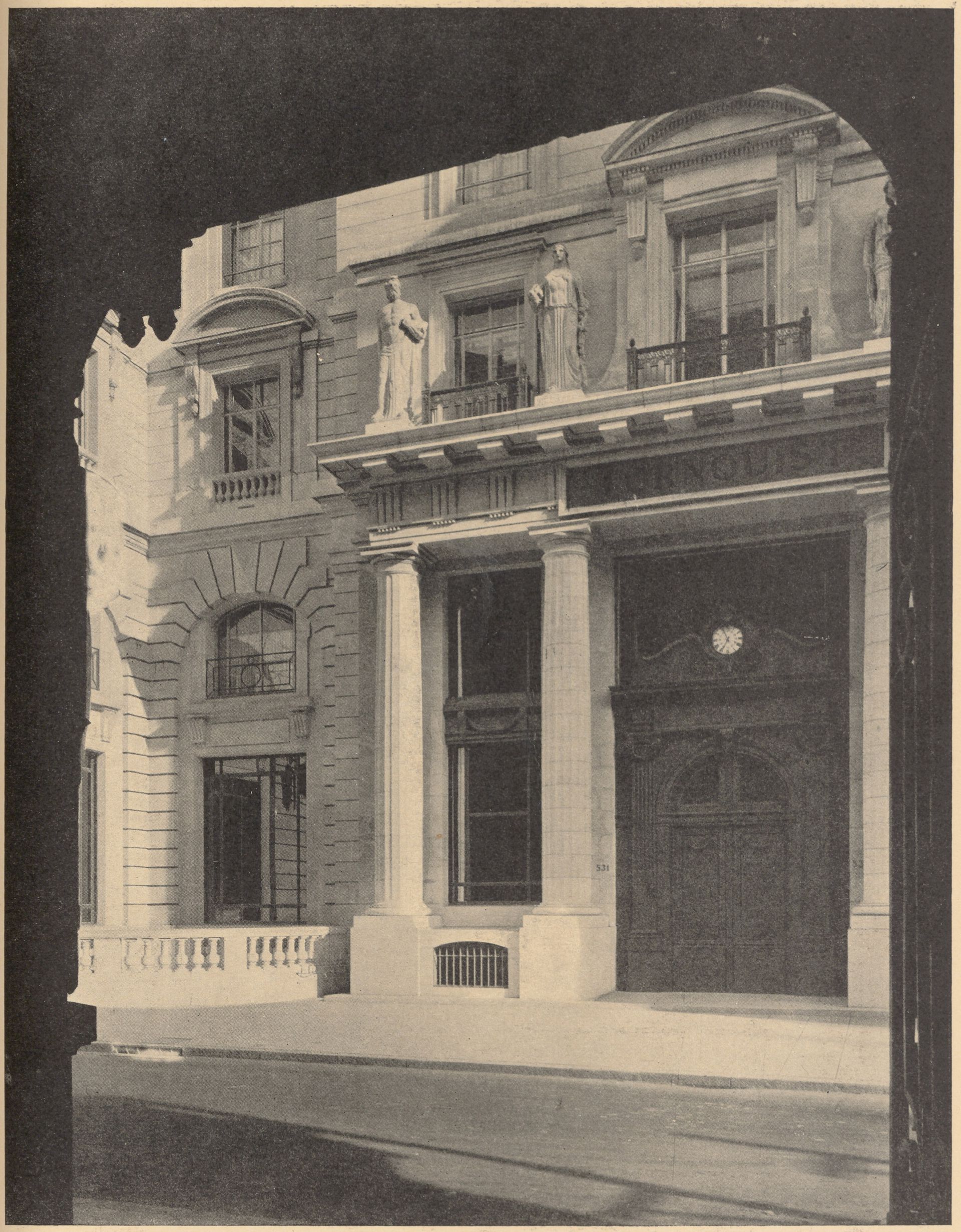
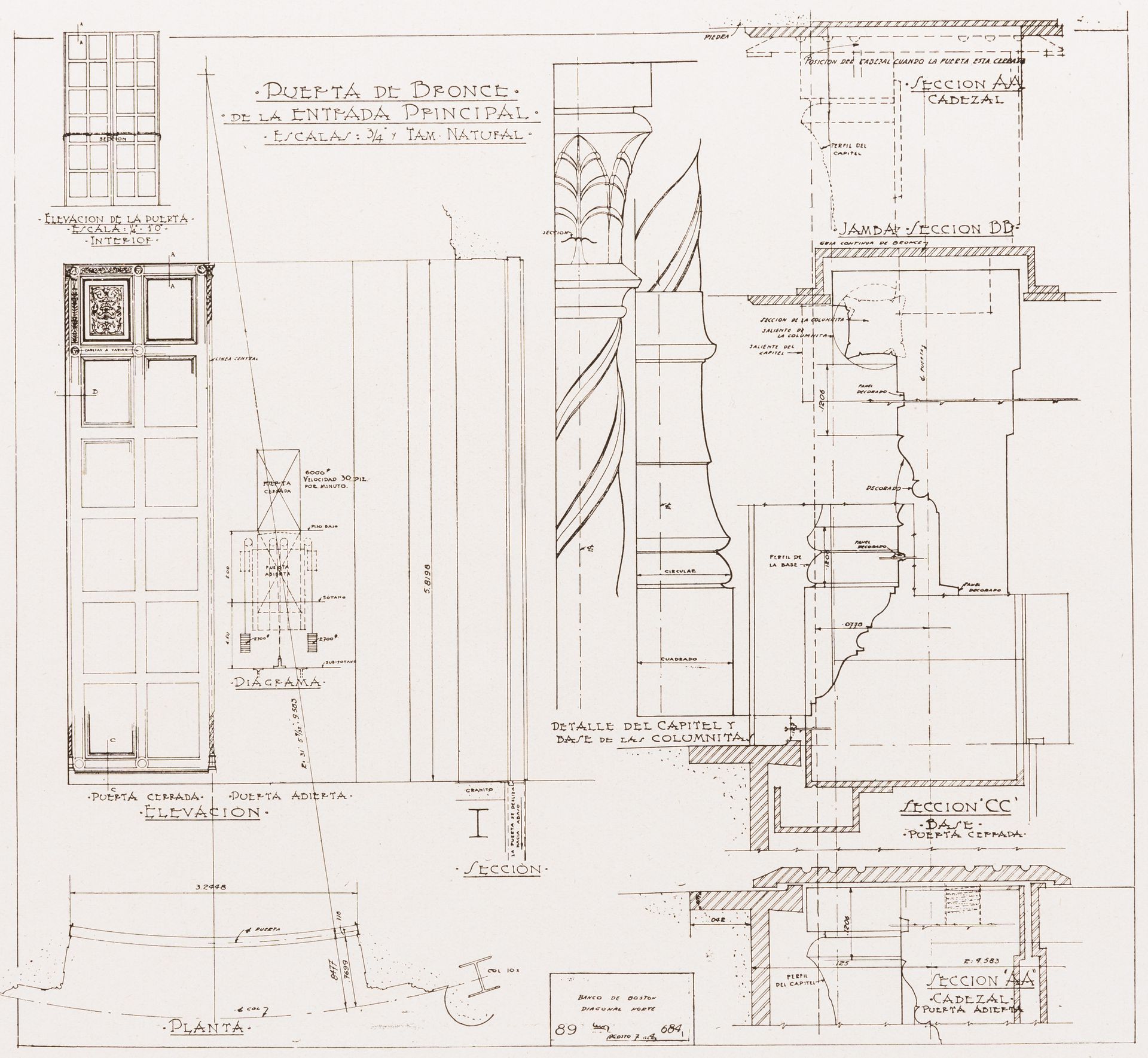
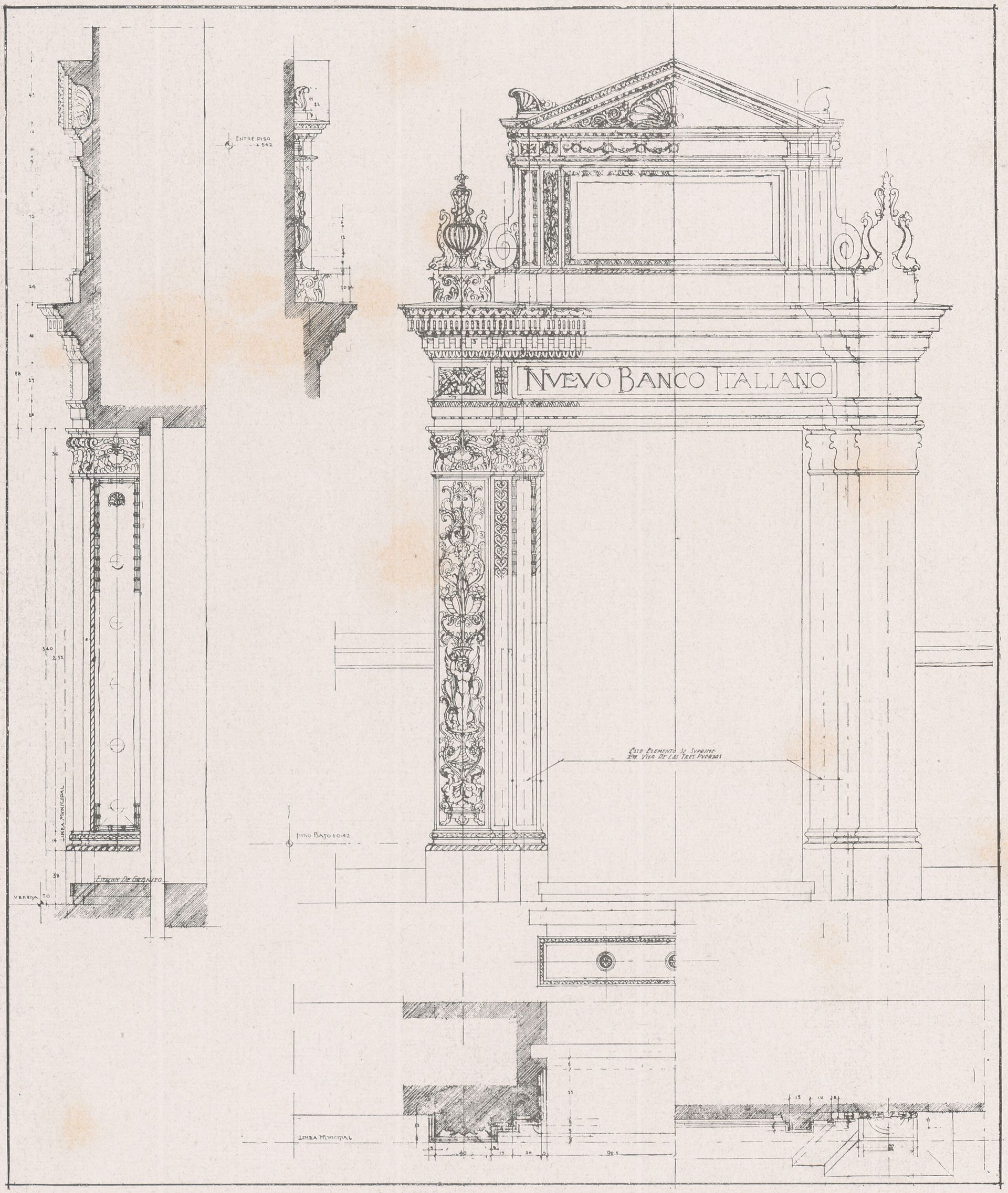
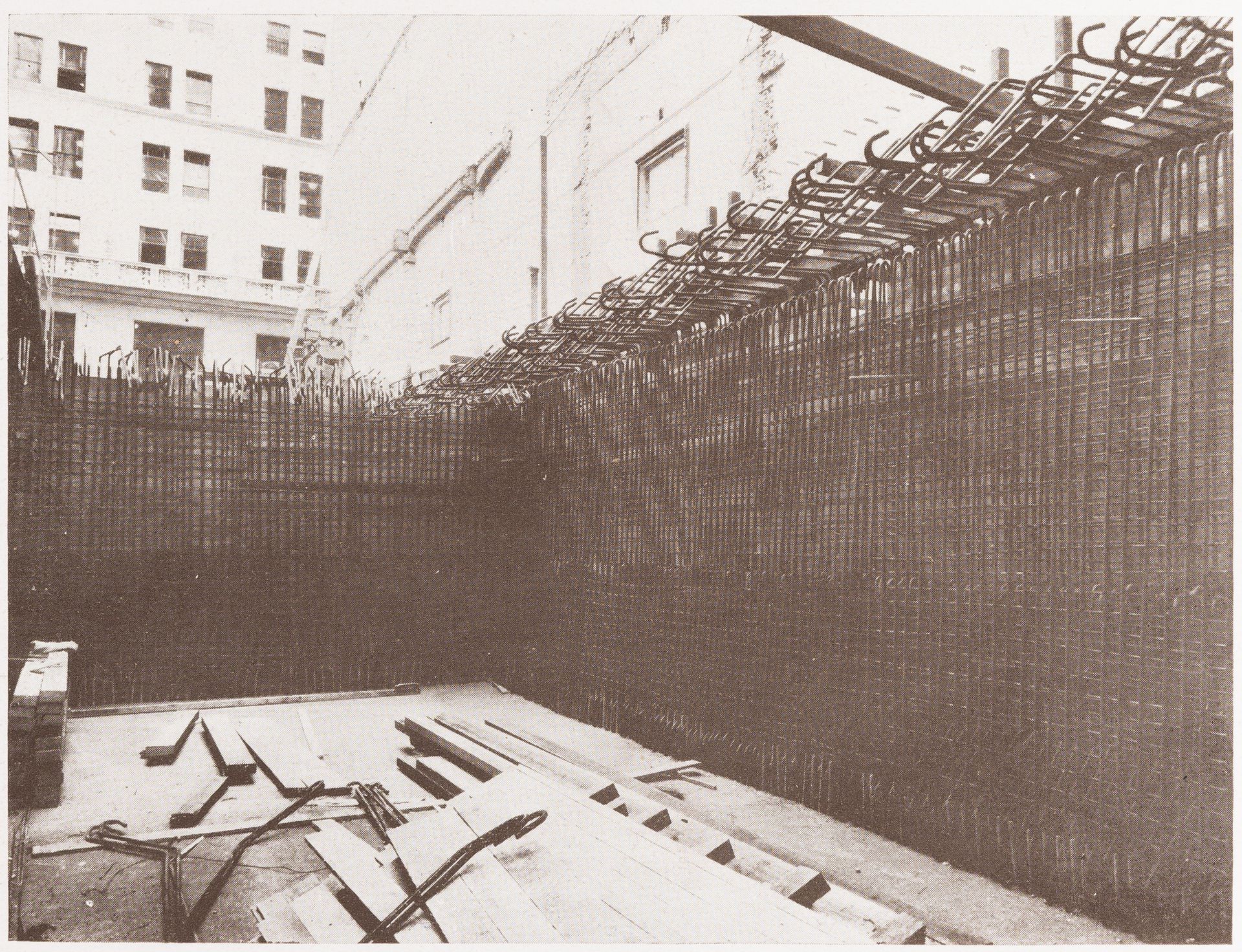
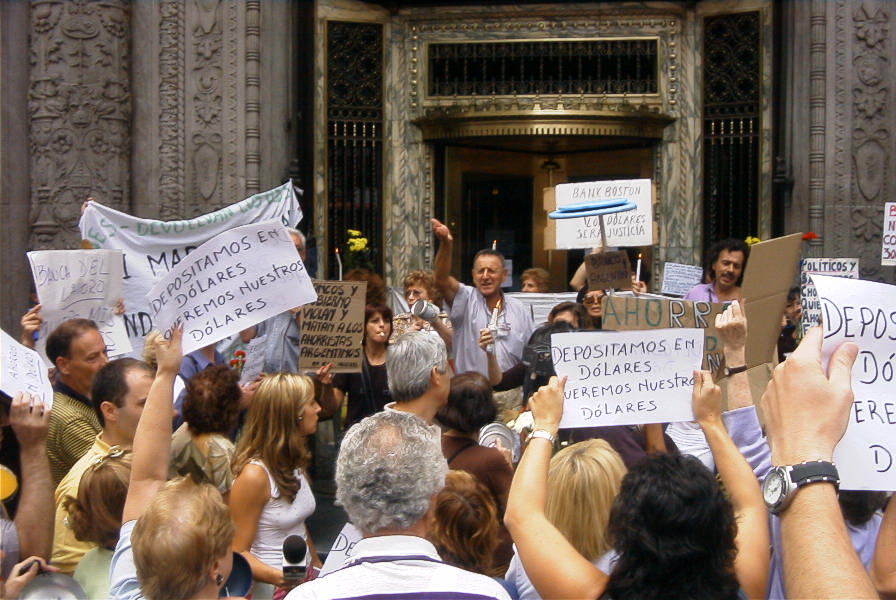
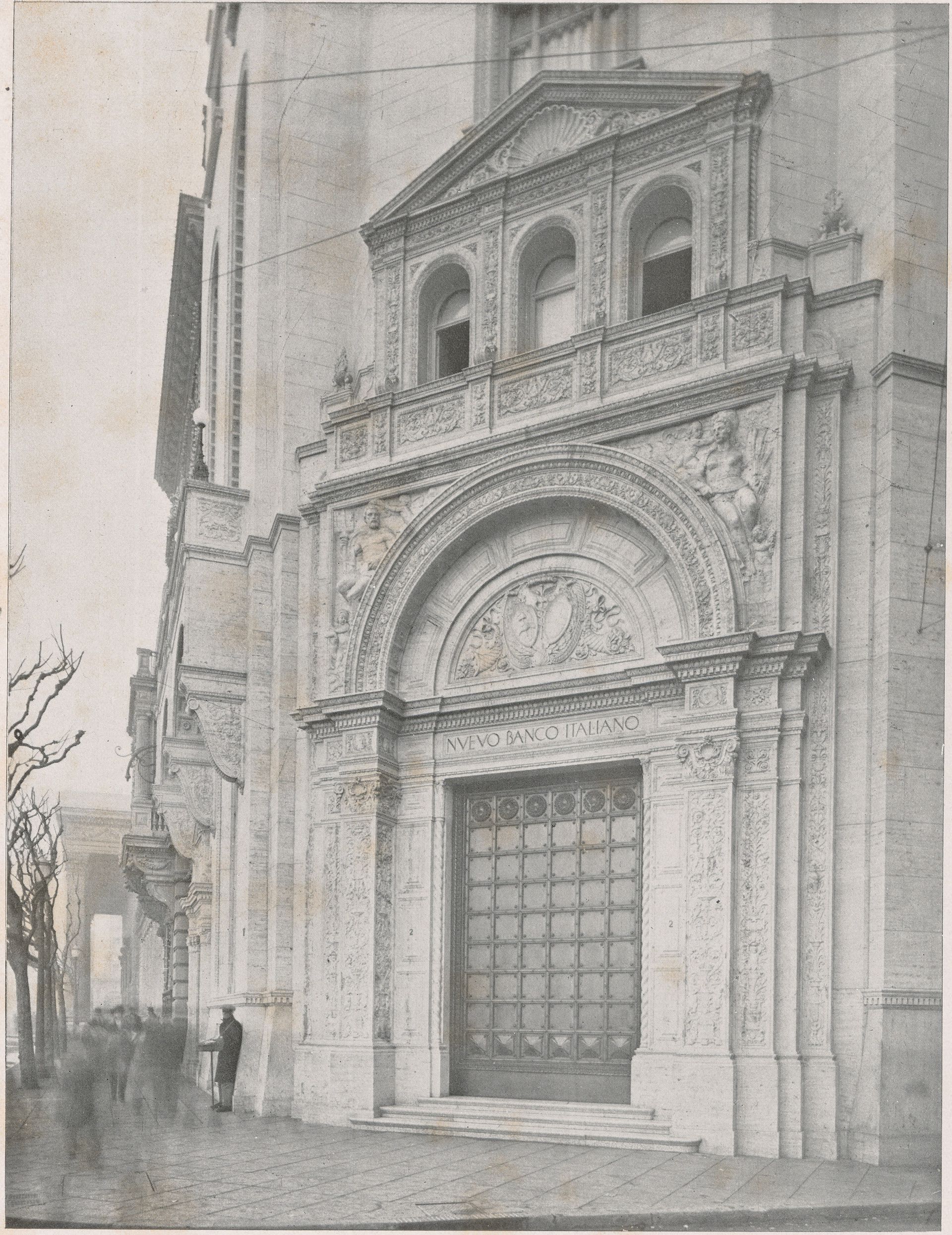
Through photographs, drawings, and advertisements of banks published in Revista de Arquitectura in the 1920s and 1930s and through photographic records of demonstrations from late 2001 and early 2002, this research reconstructs the history of an aesthetic of trust, including its fatal outcome. In all of the documents, we see closed doors are a point of reference: they are devices that concentrate the tensions between society, institutions, and the city.
Natural Disasters: The birth of Homo Dolarensis
by Dino Buzzi
“I was benevolent and good; misery made me a fiend. Make me happy, and I shall again be virtuous.” –
Mary Shelley, Frankenstein; Or, The Modern Prometheus
Rite of Passage
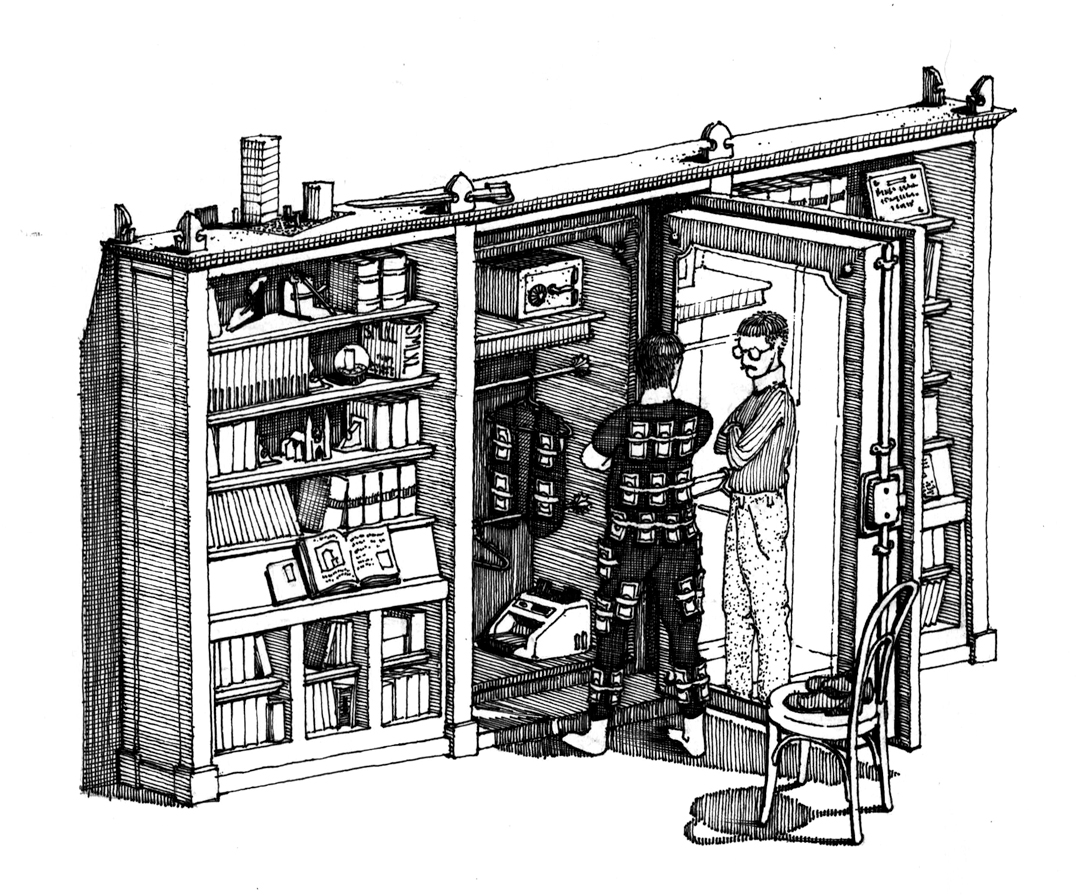
In the previous days, he had thought that, once the time came, everything would be set in motion, would soften, and give ground. That it would be less uncomfortable or feel less forced. But, as he walks downtown, sounding out and touching his customized jacket in every step, as if a dancer or a spy, he realizes that no one had prepared him for this.
Not a second goes by without him envisioning a count, a calculation in the air that he never finishes due to the glance of a suspicious-looking guy or the noise made by the exhaust pipe of a distant motorcycle. Those prying eyes and that diesel thunder could well signal the most feared accident of this walk between the place where he got off the bus and the cueva:1 a threat, a pulling, a blow on the head, and the uneasiness of realizing that he is the weakest and most vulnerable animal in the downtown ecosystem. When the alarms about a suspect turn off, he reviews again how the amounts have been distributed in the different nooks and crannies of his coat.
His aunt’s pesos, in four quite voluminous rolls (a three-bedroom apartment with a garage and a balcony-terrace, according to his calculations), are in his external pockets. His own money and that of his partner, is split into two very large pockets, created ad hoc with his sister’s help in the internal part of the coat back. Two high school friends also decided to join in this diving competition of evolving from tenants to owners, their banknotes travelling in secret folds of the hood and the right sleeve respectively. And, in the left sleeve, a contribution from his mother who had recommended travelling by bus: anonymous, without the need to cross parking lots, stop at lights, or surrender to that random fate that may befall one getting into a taxi in Buenos Aires.
He is already halfway. The slope is behind him; he is now just one among many in the downtown area. The passage from Libertador Avenue (Bajo) to the central business district (Microcentro) itself is obvious: the frequency of the financial power is weakened, the banks’ traditional headquarters are scarce and the general landscape has diversified. Now he is definitely inside, he is just one more part of the system. While he looks out of the corner of his eye at the set of buildings and the architectural details, he feels that these observations become increasingly difficult, as if the influx of the pesos distributed throughout his body were emitting some kind of radiation that contributes to deprogramming him, almost like kryptonite.
There is only one block left. He picks up his pace, touches again the radioactive pesos and thinks about how the old expression about the weight of money, historically applied to refer to millionaires and powerful people, would be used in this case with a vulgar irony. At worst, he carries no more than four or five kilos in weight. But he should not shrink himself either; after a temporal exchange into dollars, those kilos will eventually become some four or five tons of land, and, finally, the weight of a complete building.
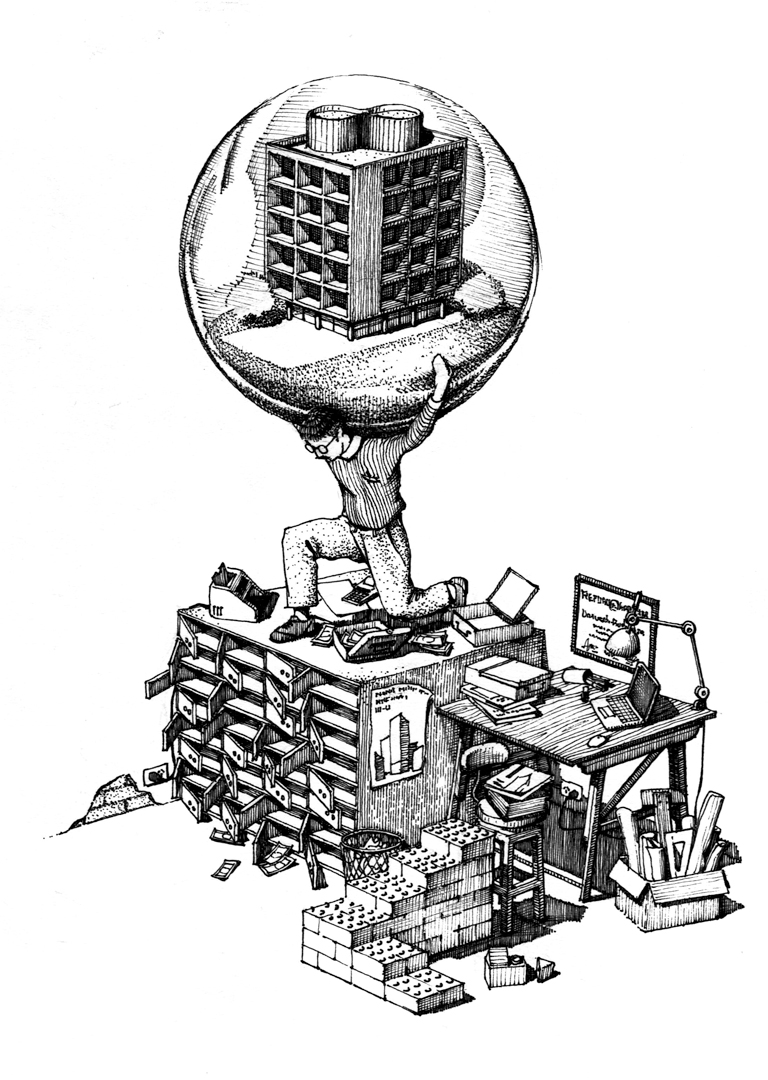
The weight he feels at that moment, then, is not related to the banknotes per se, but to the actual load of his own and collective expectations of developing a building; the effort and time invested by all those behind this endeavour. He does not know it yet, but one day he will remember this moment with tenderness and a certain shame—it is the day that the trance of his childhood and of the academy was permanently erased from his conscience, replaced with the weight of an entire building.
A way of being an architect
by Adamo - Faiden.
There is a way of being an architect that draws on desires and demands, superposed interests and a wide variety of urges projected towards architecture from environments that are quite distant from one another. The design methods and techniques developed by this model of professional find their maximum potential when facing ordinary situations. Its production becomes relevant when no one requests it. Almost always and almost anywhere. This way of being an architect is then associated with a large field of action. An extensive, ductile environment in which to deploy its agenda.
For better or for worse, the city of Buenos Aires favoured the development of this way of being an architect. A historically meagre program of competitions prevented the proliferation of architects focusing on public work. The exceptional materializations produced under this system of contracting have become just that: exceptions. Neither the city nor professional practices have been shaped by protected occasions for projects—that is, for buildings that are desired and produced independently of private interests.
Given this rather unstimulating description, it is worth noting that this same city enjoyed a fluid cultural exchange with the world. Ideas have travelled back and forth, through the skies and across the oceans, guarded by architects with a universal vocation, eager to participate in the debates that ran through each one who took part in the discipline. It’s possible that the architectural production of Buenos Aires responds to a great extent to the scarcity of institutions that promote it, and to an extreme vocation to practice it at all costs. The protagonists embarked on this approach realized that the characteristics of their environment would prevent them from accurately reproducing external models. And instead of offering resistance, they used their entire arsenal of contingencies to unleash a fresh iteration of the same design protocols, making a context run through by the laws of the market offer surprising versions of a disciplinary agenda that was tried out in other contexts. This group of architects will be responsible for expanding the elements involved in the project. For them, designing will also imply finding the right position within each economic cycle; will imply the careful construction of a new kind of client in keeping with his interests and, above all else, it will imply developing a keen sense of opportunity.
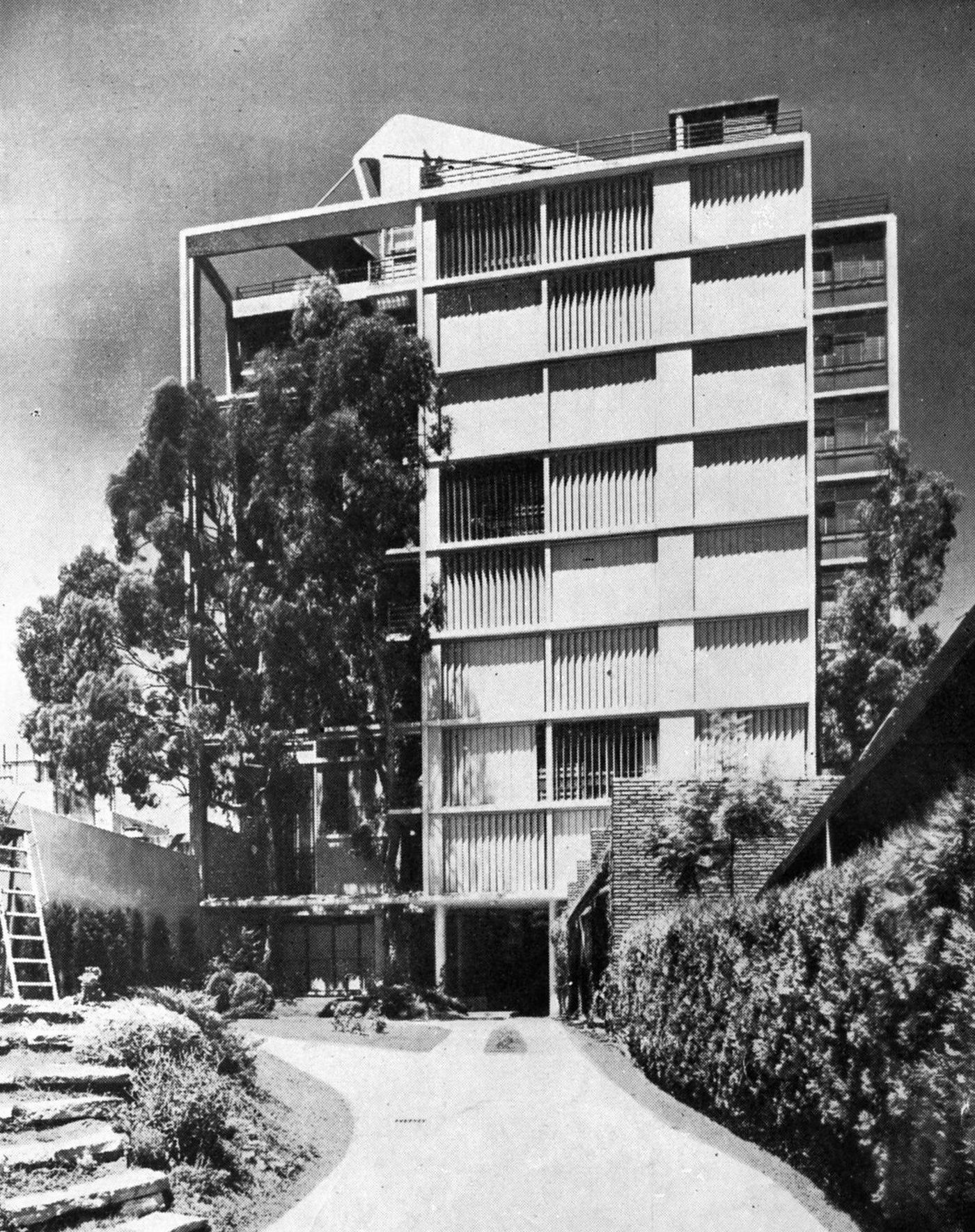
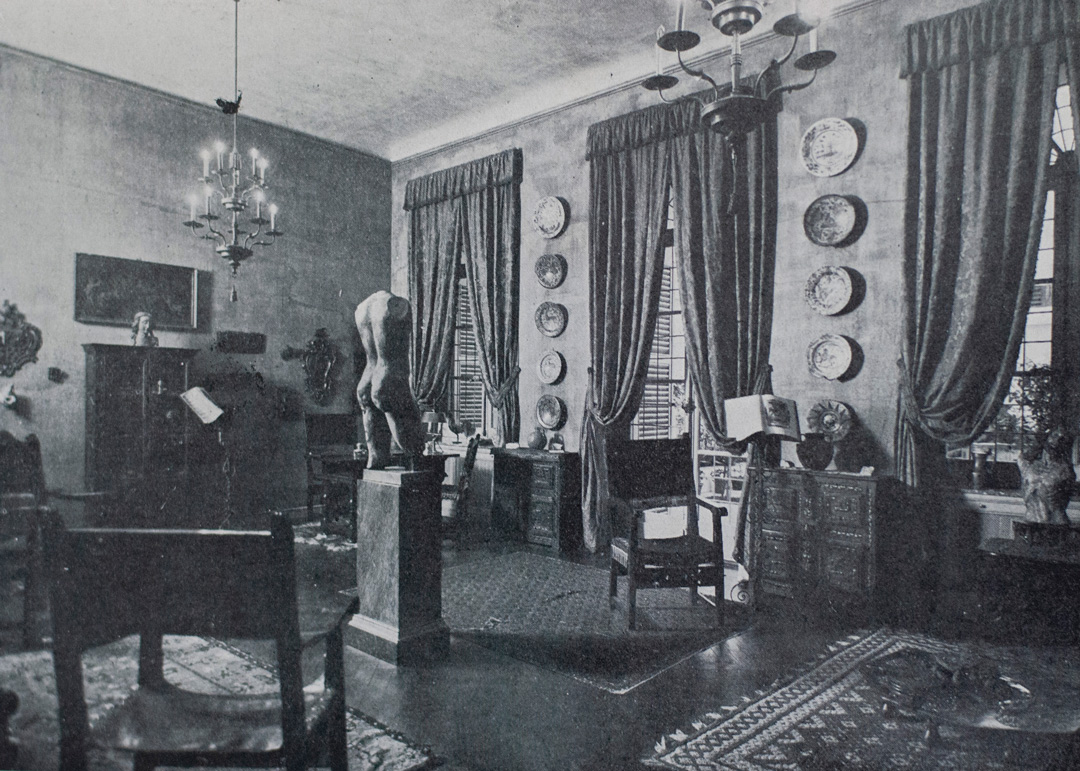
But to describe this way of being an architect more precisely, we may need to go a little deeper. If so far we have referred to one’s ability to combine an architectural agenda in a challenging context, to say the least; finally we enter the sphere of private obsessions and fantasies, placed at the service of one’s own idea of domesticity. The social and economic conditions of Buenos Aires were accompanied by a dense, compact fabric, built on relatively small plots that were easy to regenerate. This environment will shape a fertile territory in which to try out new models of collective housing. This will be was the chosen typology. The group of architects to which we now want to turn our attention decided to build their own homes surrounded by other people and other buildings. Dissolved in the landscape of a city that today weaves a century of history by stopping at each of these buildings. Transforming each case into an observatory to rediscover our territory. A place from which we separate ourselves from the ground to obtain distant views capable of running through time and renew the sense of our ambitions.
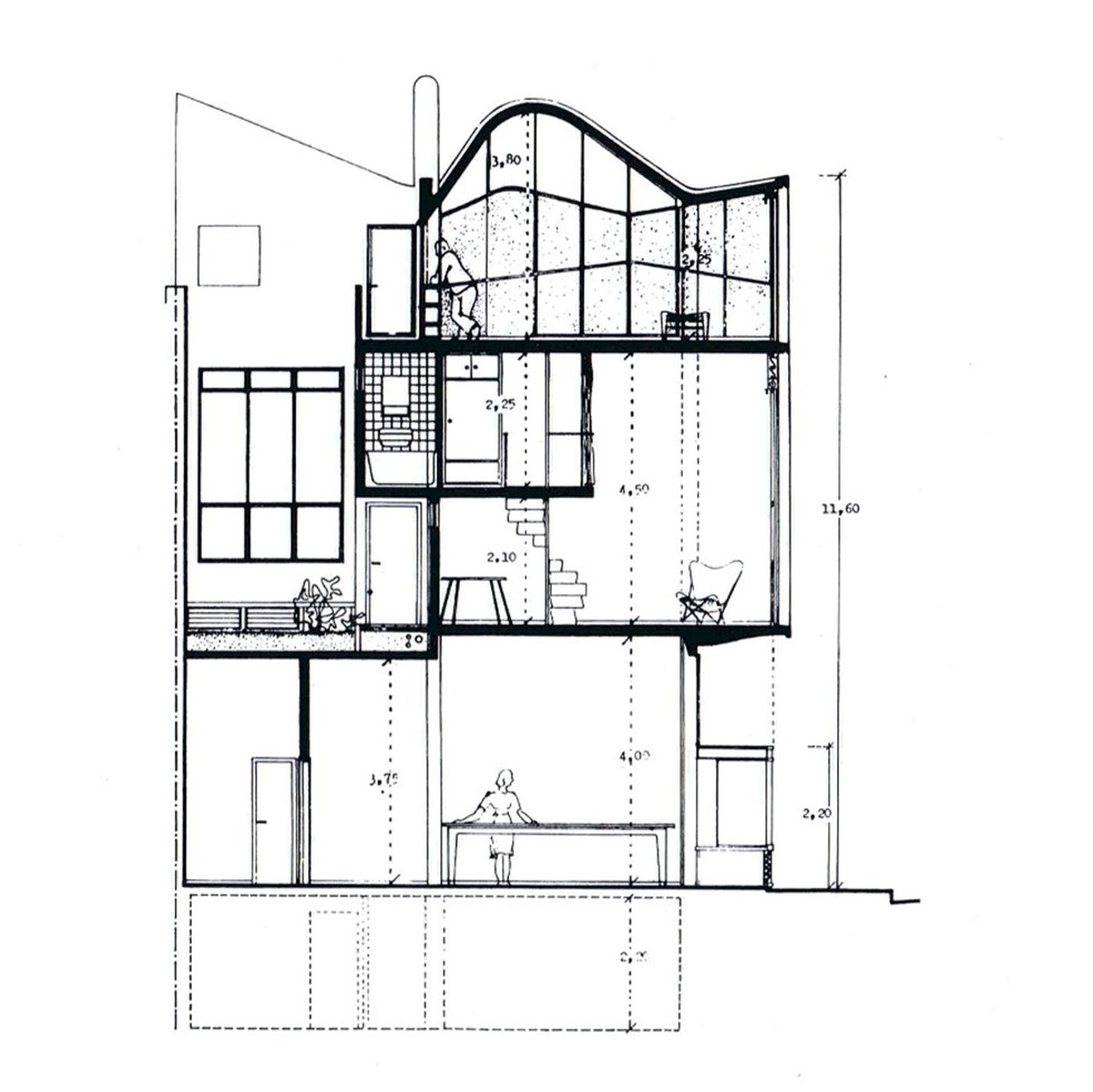
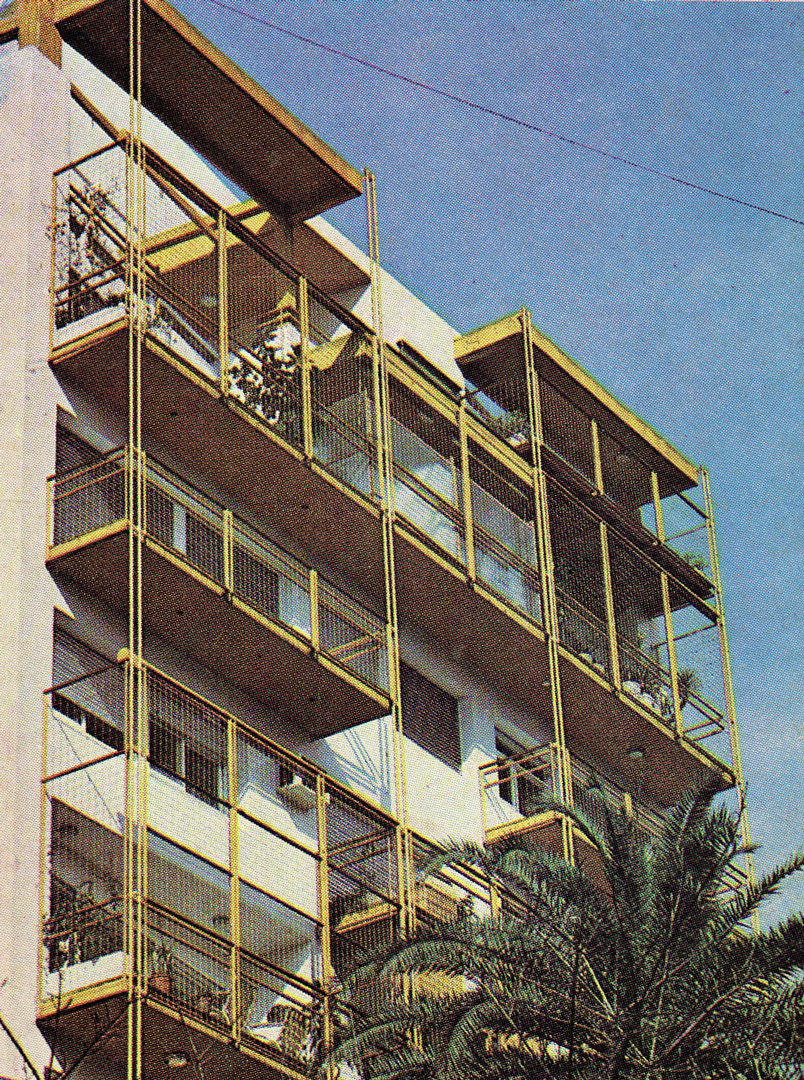
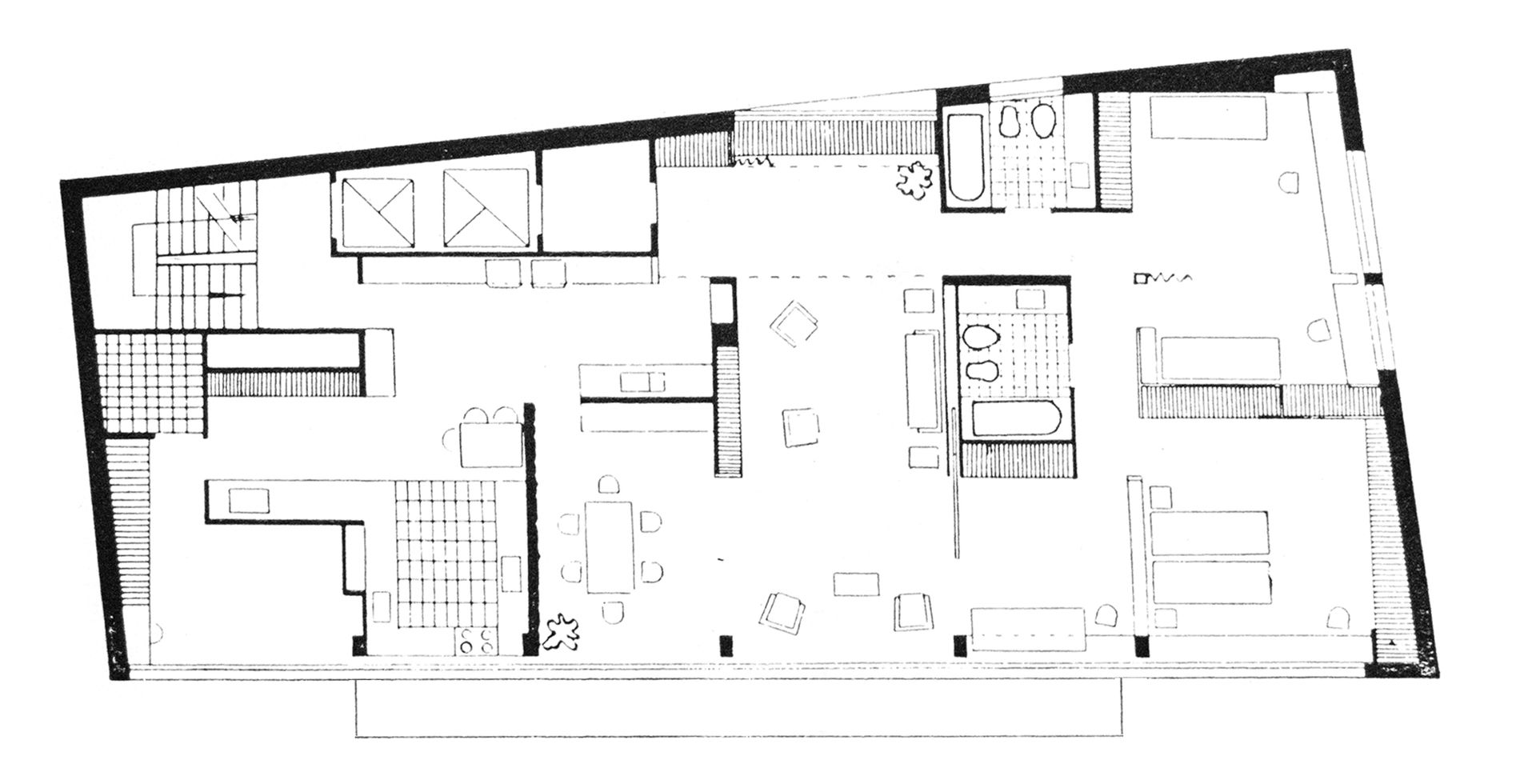
The shape of money.
by Juan Campanini y Josefina Sposito
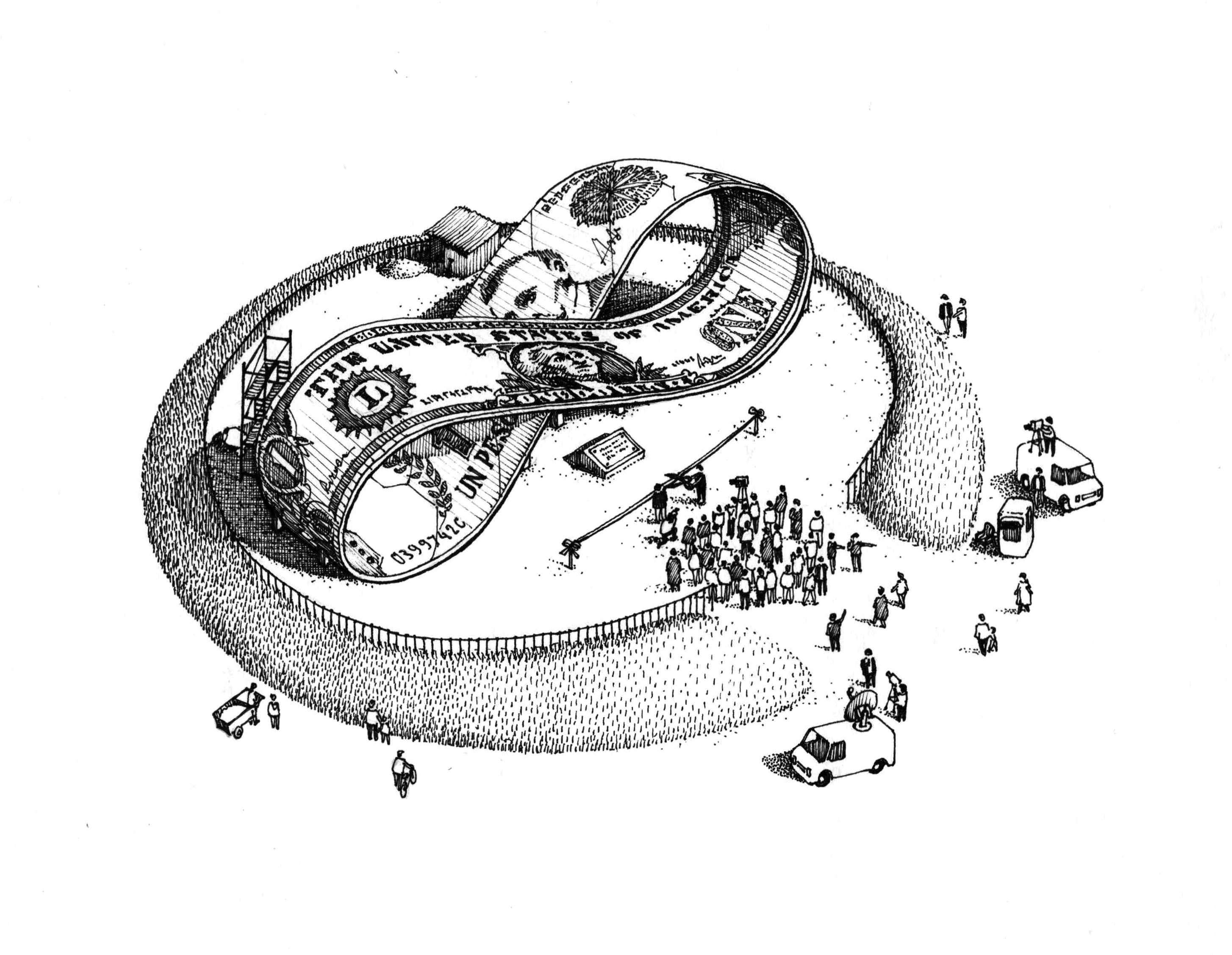
Since its inception, YouTube has repeatedly hosted a kind of video which, with variations, revolves around the same mystery: what physical space does money occupy at a large scale? The proliferation of these audiovisual narratives and their success on this platform, attracting millions of views each, demonstrate the prosaic curiosity for money in its most tangible form.
To make the physical dimensions of the accumulation of money obvious and easily understandable to any casual viewers, most of the videos repeat the same format: a three-dimensional visualization of known objects, their only point in common being their ability to apportion scale to something that, previously, we knew only nominally. If, with the boom in the virtuality of money, it is still relevant to ponder its physical condition, this question is undoubtedly even more pertinent in Argentina.
The economic crisis of 2001 and 2002, with the sudden retention of citizens’ savings by the state and banks, prompted an abrupt and traumatic breakdown in the already turbulent relationship between citizens and the financial system. It also brought an end to the aesthetics of security designed over years for bank architecture. Its great doorways and imposing façades then became the backdrop for popular demonstrations, while the treasures and vaults below remained unknown, heightening the mystery shrouding everything in the collective imagination that can be named but is not known. Widespread uncertainty eliminated savers’ ability to visualize their money in a huge underground safe. Their cash, which they had deposited in person, was gone—it had no physical location, no longer existed. As a result, the compulsive need to make money tangible (and therefore safe) transformed and multiplied its nature, moving away from the banking system and converting the underground treasures of la City Porteña into just one more example of the form of money.
In this respect, construction and “brick savings” emerged as a concrete alternative to deposit long-term savings, an opportunity to reactivate a market related to many types of industries and jobs; and also for architecture at all its scales. The boom in the international price of agricultural commodities, fundamentally soybeans, along with the influx of foreign exchange for their export, represented a breather (and some Argentinian pesos) for state coffers and citizens’ pockets in the context of an economy that was having to start from scratch. At the same time, the reactivation of consumption took many forms, boosted by the creativity of a population accustomed to economic fluctuations and instabilities. Savings, regardless of their measure, became tangible, with many different forms and moments; they were multiple, varied and unexpected—like life itself.
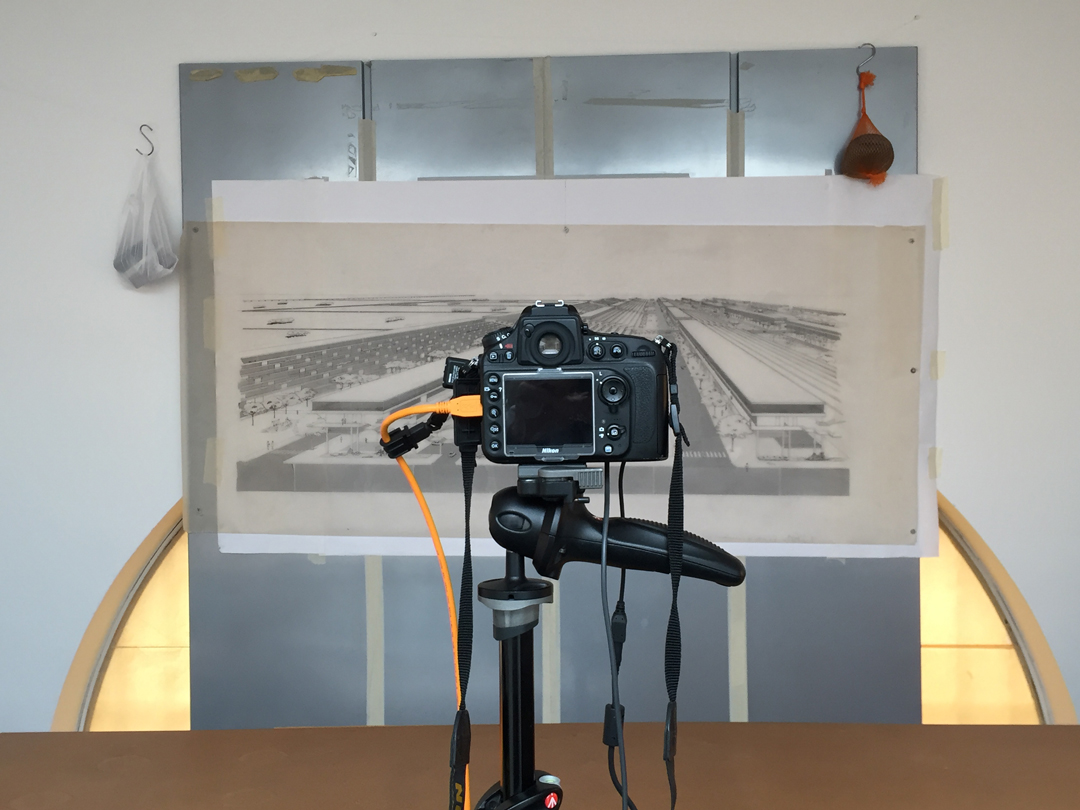
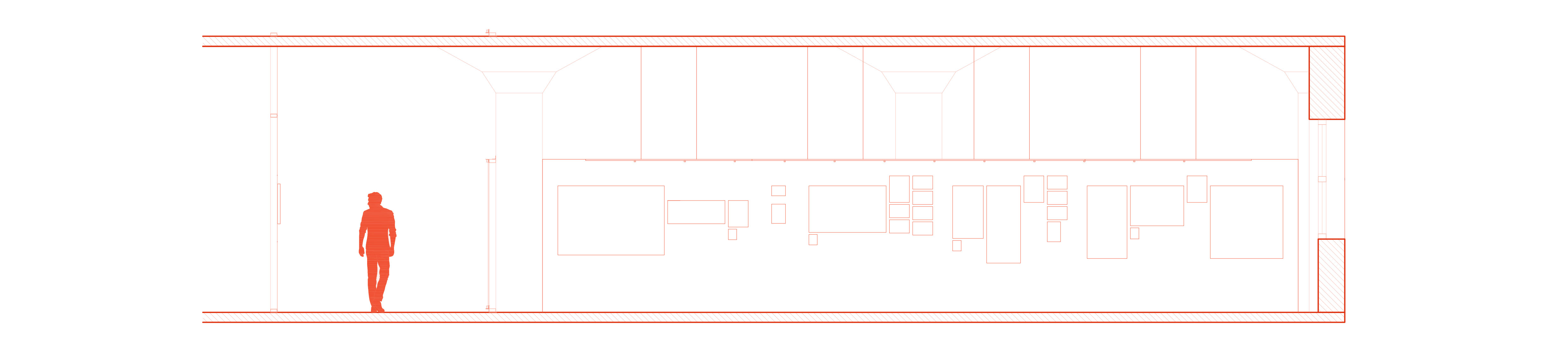
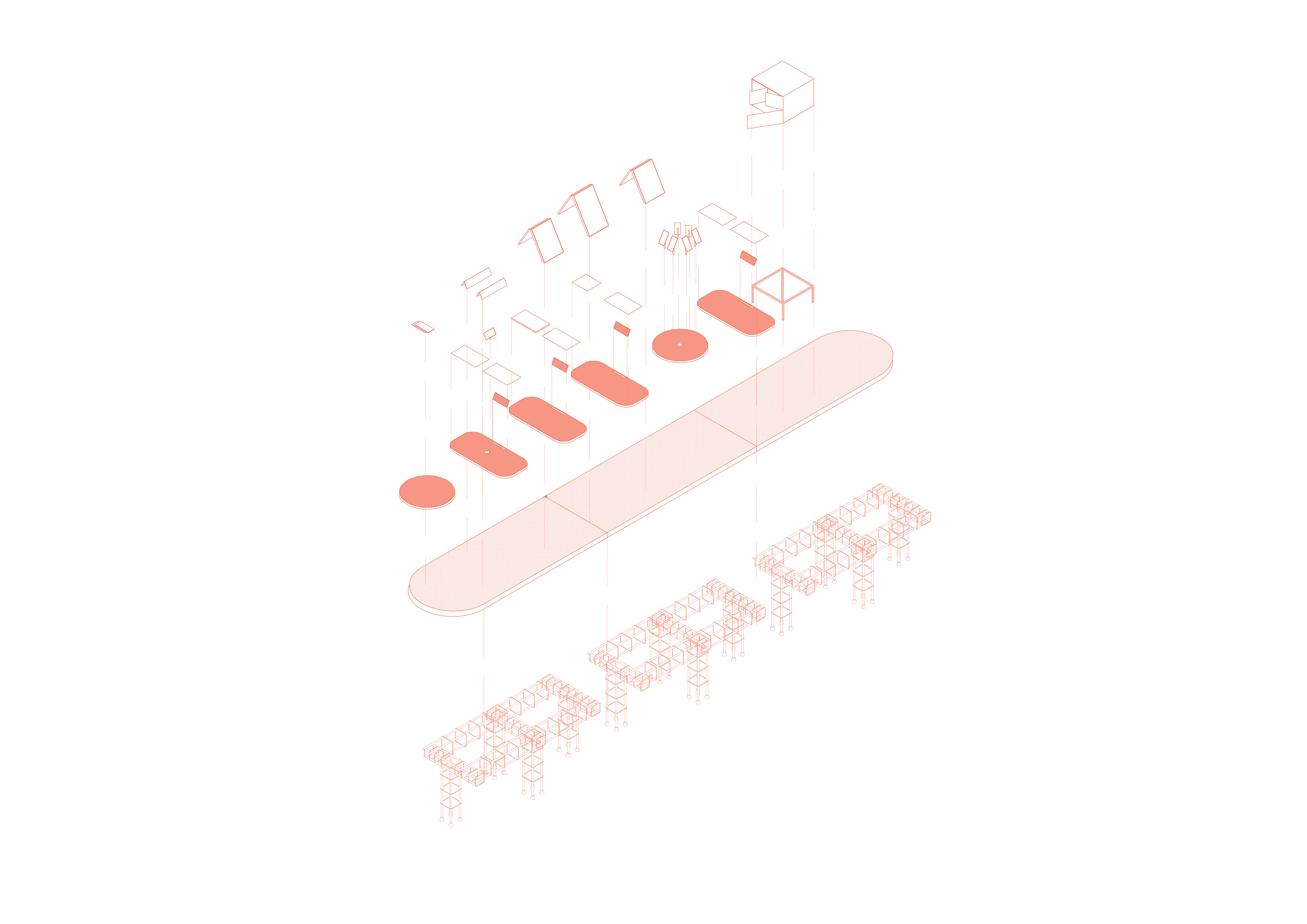
Any attempt to unify a story that visualizes all the forms that money takes and describes them simultaneously rapidly comes up against the problem of its enormous diversity. But if relating dissimilar objects is fundamentally an architectural exercise, the representation techniques of the discipline are suited to the task, particularly the descriptive geometry techniques developed by Gaspard Monge in the late 18th century and later adopted as the fundamental language of architecture. Monge’s artifice serves to translate any three-dimensional object into a plane using a system of parallel projections that also makes them sufficiently abstract to be perfectly legible, measurable and, therefore, comparable.
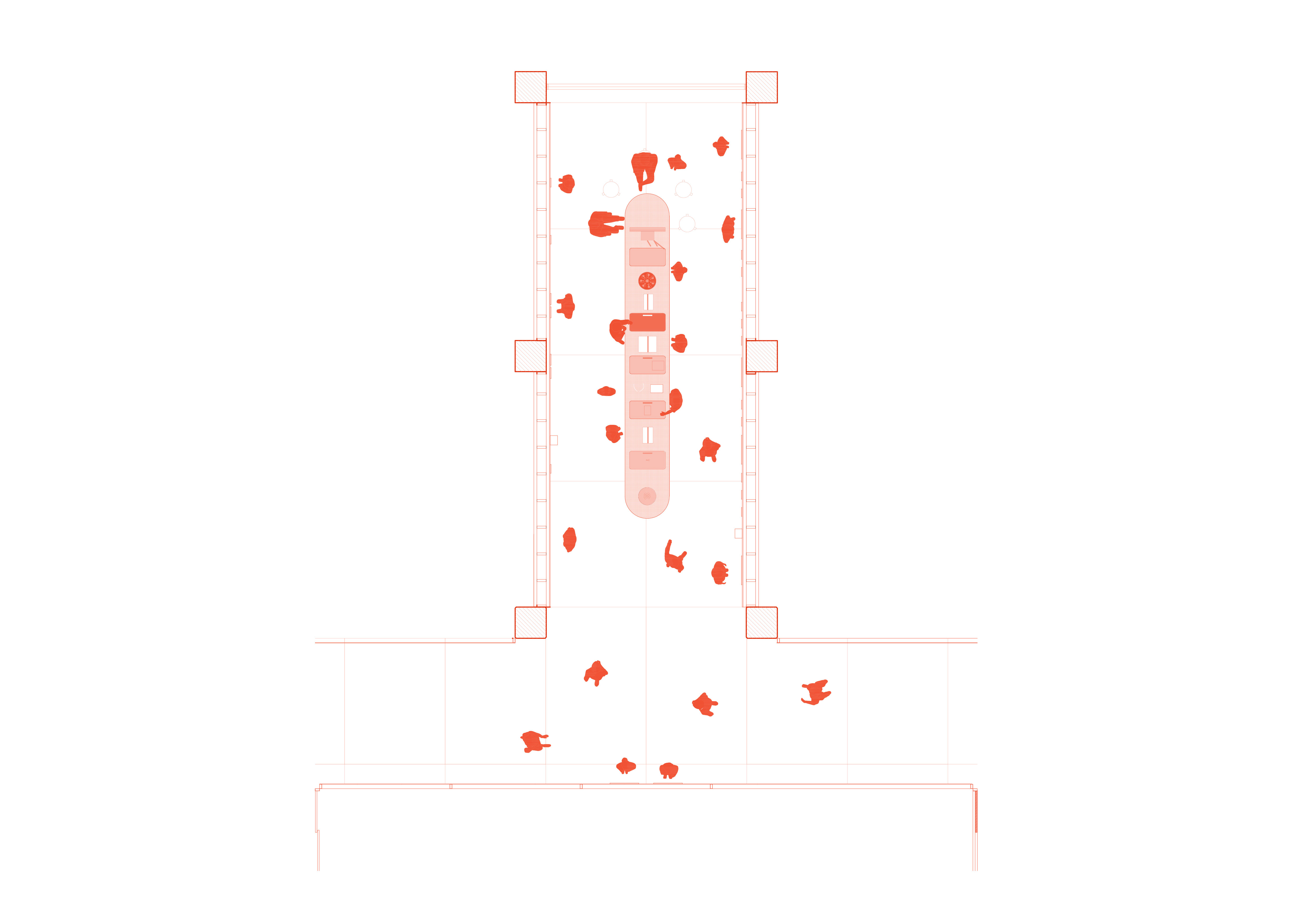
The Shape of Money
Diseño de exhibición
Estudio Normal
 Download Project Presentation